

Contents
Intestinal microbiome – what does it mean?Microbiome and weight changeThe role of probioticsMyths and factsWhat makes a good microculture preparation?Our test resultsEveryone knows them: Those people who seem to eat whatever they feel like, only know sport from television and yet always stay slim and trim. When asked about this, most people explain the phenomenon with "good genes" - not very satisfying if you are not one of those favoured by fate, as there is hardly anything you can do about your own genes.
Does this mean that we should simply reconcile ourselves to the fact that losing weight is simply not intended for some people? Not necessarily, because current research offers hope: it suggests that there is another factor that we can influence: We are talking about the so-called gut microbiome. The term sounds familiar - but what exactly is behind it?
Summary
Millions of people worldwide suffer from weight problems. However, the causes were unclear for a long time.
In the meantime, scientists worldwide agree: the gut and the bacteria living in it have a major influence on the entire body.
For this reason, so-called probiotics are becoming increasingly popular.
Despite their diversity, there are some fundamental quality criteria that we have used to test popular products.
Go directly to the test
Gut microbiome - what does it actually mean?
The intestinal microbiome refers to the totality of all living organisms found in our intestines. These are mainly bacteria; a healthy gut microbiome contains up to 100 different strains! It is important to note that in order for the gut to fulfil its functions, a precisely balanced ratio of the individual bacterial strains is required.

If one strain is overrepresented, or there is too little of the other, or there are not enough bacteria overall, the microbiome becomes imbalanced.
Such an imbalance, also known as dysbiosis, can have a variety of effects - not only on obvious areas such as digestion, but also on our mood, our immune system and many other areas.
But what does all this have to do with our weight?
Microbiome and weight changes - what the science says
A survey from 2021 shows: More than 4 in 10 Brits are trying to lose weight - that's more than 26.5 million.
At the same time, however, studies also show that conventional diets are only successful in around 20 percent of cases in the long term due to their numerous restrictions - but what does this mean for the "remaining" 80 percent? Should they simply surrender to their fate? Not if microbiome science is anything to go by, because for some years now there have been ground-breaking findings regarding the connection between the gut microbiome and the way our body deals with calories.
This also applies to the research of former Harvard researcher P. J. Turnbaugh: He analysed the microbiome of a group of twins in which one twin was overweight and one twin was slim. It was found that the overweight (unrelated) study participants had similarities that even distinguished them from their own slim twins: The overweight participants had a significantly reduced diversity and altered composition of gut bacteria.
So could it be that the cause of obesity lies - at least in part - in the gut microbiome?

In order to get to the bottom of the matter, he carried out further experiments and was able to show, among other things, that the microbiome of mice that had undergone stomach reduction also changed. When he then implanted this altered microbiome into mice that had not undergone stomach reduction, they still lost a significant amount of weight - which showed that the altered bacterial actually made a considerable contribution to the weight loss of the mice studied.
So far, so good, but how do you get hold of another person's microbiome? A famous doctor from China asked himself this question back in the 4th century. His solution was relatively simple: an oral faecal transplant. Unfortunately, however, this procedure was at least as unappetising as it sounds, as patients had to ingest the stool of a healthy person through their mouth.
Although this form of therapy doesn't sound particularly appealing (even when it was given the poetic name "golden syrup" in the 16th century), it has been practised for a long time. Even today, the principle of stool transplantation is still practised in some cases - but fortunately in a far less unappetising way: the "foreign" stool is now administered via colonoscopy or capsules (up to 30 a day).
However, as these methods do not necessarily sound tempting and a stool transplant is not entirely without risks and, above all, involves high costs, it is only the method of choice in rare cases. So is there perhaps an alternative?
This is what a balanced microbiome is important for:

Supporting the immune system

Preventing allergies

Regulating the metabolism

Maintaining mental health

Promoting skin health

Absorbing vitamins

Vitality in old age
Probiotics - the remedy of choice for weight problems?
This is exactly where so-called probiotics come in. These preparations contain live microorganisms that are supposed to colonise the gut. The aim is to rebalance or "replenish" the microbiome in the hope that - as in the experiments described above - the pounds will finally drop off. But can weight loss really be that easy?
Sounds too good to be true, but there are actually several studies that support this theory. For example, a Japanese research team found that a certain strain of bacteria influences fat absorption in the gut and promotes the excretion of fats. To put it simply: fatty food does not end up on your hips, but in the toilet.
Another study came to a similar conclusion: a group of young men followed a particularly high-fat diet plan for 4 weeks. One part of this group was supplemented with a probiotic preparation, the other part received a placebo.
The participants were thoroughly examined both before and after this test period, and their weight, BMI and body fat percentage were recorded. The astonishing result: the participants in the placebo group gained significantly more weight than the participants who had received the probiotic.

Probiotics therefore have great potential for weight management. However, this raises the next problem: the incredible variety of products currently on the market. How is the layman supposed to separate the wheat from the chaff?
This article has addressed this question: It explains which myths generally surround the topic of probiotics, which quality characteristics should be taken into account when buying probiotics and then subjects 5 products to a quality check.
Myths and facts about probiotics
As with all hype, numerous myths and claims have quickly formed around the topic of probiotics, making it difficult to choose the right preparation. This article takes a closer look at the most widespread myths:
Myth 1: Probiotic equals probiotic
Fact 1: We can answer this myth with a clear "false".
The various preparations we analysed differed greatly from one another. This was particularly evident, for example, in the number of bacterial strains analysed as well as in the dosage and packaging. All of these criteria ultimately determine the quality of a product.
Myth 2: Probiotics do not work because they are broken down by stomach acid
Fact 2: Not true.
In fact, some bacteria, especially bifido- and lactic acid bacteria, are insensitive to stomach acid. Even if this may sound surprising at first, it is logical - after all, the bacteria already present in our intestines, which we have ingested through our diet, have also taken this route and arrived alive in our intestines - without the much-publicised enteric-coated capsules and similar mumbo-jumbo.
Myth 3: Probiotics provide hardly any more bacteria than our conventional diet
Fact 3: This myth is also rather untrue.
On the one hand, there are certainly foods with probiotic properties; yoghurt, for example, but also sauerkraut and the currently popular Korean kimchi contain lactic acid bacteria. However, these are usually only a few different strains. On the other hand, it is important to note that many products are pasteurised, which kills the bacteria (both good and bad).
Incidentally, the amount of bacteria also differs considerably. Good microculture preparations contain at least 20 billion colony-forming units (CFU).
Myth 4: A good probiotic is expensive
Fact 4: Rather not true.
Probiotics are available in all price ranges. Of course, everyone is happy when they can save money, especially when it comes to products that are to be taken on a daily and long-term basis. However, this should not be forgotten: Good basic research, careful selection of strains, a high dosage and appropriate packaging have their price. Even if we do not want to devalue cheap products across the board, cheap offers should be viewed with caution for the reasons mentioned.

Myth 5: A good probiotic works immediately!
Fact 5: Rather no.
The idea of so-called probiotics is to support the intestinal microbiome in the long term. Considering how many bacteria our intestines contain, it is clear that great successes can hardly be achieved overnight.
Although some people notice slight changes after the first week (especially in the area of digestion), micronutrient specialists recommend taking the product for at least 2 to 3 months.
What makes a good probiotic and which products fulfil our requirements?
In the course of their research, the expert team identified 5 key quality features and then tested 5 products for these features.
Quality characteristic 1: The number of bacterial strains contained
A good probiotic endeavours to come as close as possible to the composition of a balanced human intestinal microbiome. In principle, it should mimic a faecal transplant - but without the disgust factor. However, a human gut does not only harbour 3 to 10 different bacterial strains, but far more. Accordingly, it should contain at least 50 different strains.1
Quality characteristic 2: The dosage of colony-forming units
Although figures such as 2, 4 or 10 billion CFU sound very impressive at first, current research shows that a healthy gut contains 10 to 100 trillion bacteria. Preparations with too low a dosage are therefore not significant enough to actually bring about a change. Our expert recommends products with at least 20 billion CFU.2
Quality characteristic 3: Support for the intestinal mucosa
In order for the microcultures to colonise the intestine and do their work there, they need a suitable breeding ground: an intact intestinal mucosa. The problem is that the intestinal mucosa is often damaged, especially in the case of intestinal problems, which makes it difficult for the good bacteria to colonise.
In addition to bacteria, probiotics should therefore also contain substances that support the intestinal mucosa, such as the B vitamins niacin and biotin. A product containing at least two such substances will be awarded 100 points, whereas products containing one such substance will be awarded 50 points.
Quality characteristic 4: The stability of the packaging
The bacteria in a probiotic are put into a kind of hibernation during production by freeze-drying. When they come into contact with moisture, they "wake up". If suitable food sources are then available - which is the case in the intestine - the bacteria thrive. The problem is that many forms of packaging do not adequately protect the preparations from moisture.
For example, if capsules are not packaged individually but together in a plastic container or jar, the products come into contact with air or moisture every time they are opened. As a result, the bacteria can awaken too early, but then find no food in the capsule - and starve to death.
Plastic packaging is made even more difficult by the fact that the material does not completely keep out moisture: Tiny amounts of moisture can pass through the packaging. In these cases, it is therefore not uncommon for all the bacteria contained in the packaging to be dead by the time it is ingested.
Aluminium-aluminium blister packs, in which each capsule is individually embedded in an aluminium chamber and is therefore optimally protected, are regarded as the packaging gold standard.
Products with this kind of packaging will therefore receive full marks. In contrast, plastic blisters, while still offering single-unit packaging, are made from inferior materials. As a result, products with plastic packaging will only receive 75 points.
While the properties of glass are superior to those of plastic, glass bottles usually contain a greater number of capsules, which leads to them being in contact with air and therefore moisture with every opening. Glass bottles therefore are only "worth" 50 points. Plastic bottles on the other hand combine the disadvantages of glass bottles and plastic blisters and can therefore only be awarded 25 points.

Aluminium-aluminium blisters protect bacteria in their capsules optimally from moisture.
Quality characteristic 5: Quality standards and certification
Unfortunately, there are hardly any legal requirements for the production of probiotics. For this reason, many manufacturers advertise with certifications - but these often only cover a minimum standard. It is therefore particularly important to take a closer look at the certifications advertised.
Production according to GMP (Good Manufacturing Practice), the pharmaceutical grade production standard, ensures the highest standard. Only with GMP-certified manufacturers can consumers be sure that their products have been manufactured to this particularly high standard, which is why products with this certificate will be awarded 100 points, whereas products missing it will receive zero points.

Note: The term ‘probiotic’ is widely used, but may not be used to advertise a corresponding product.
The editorial team has instead opted for the more appropriate term ‘microculture preparation’.
Based on these criteria, we analysed 5 products and came to the following conclusion:

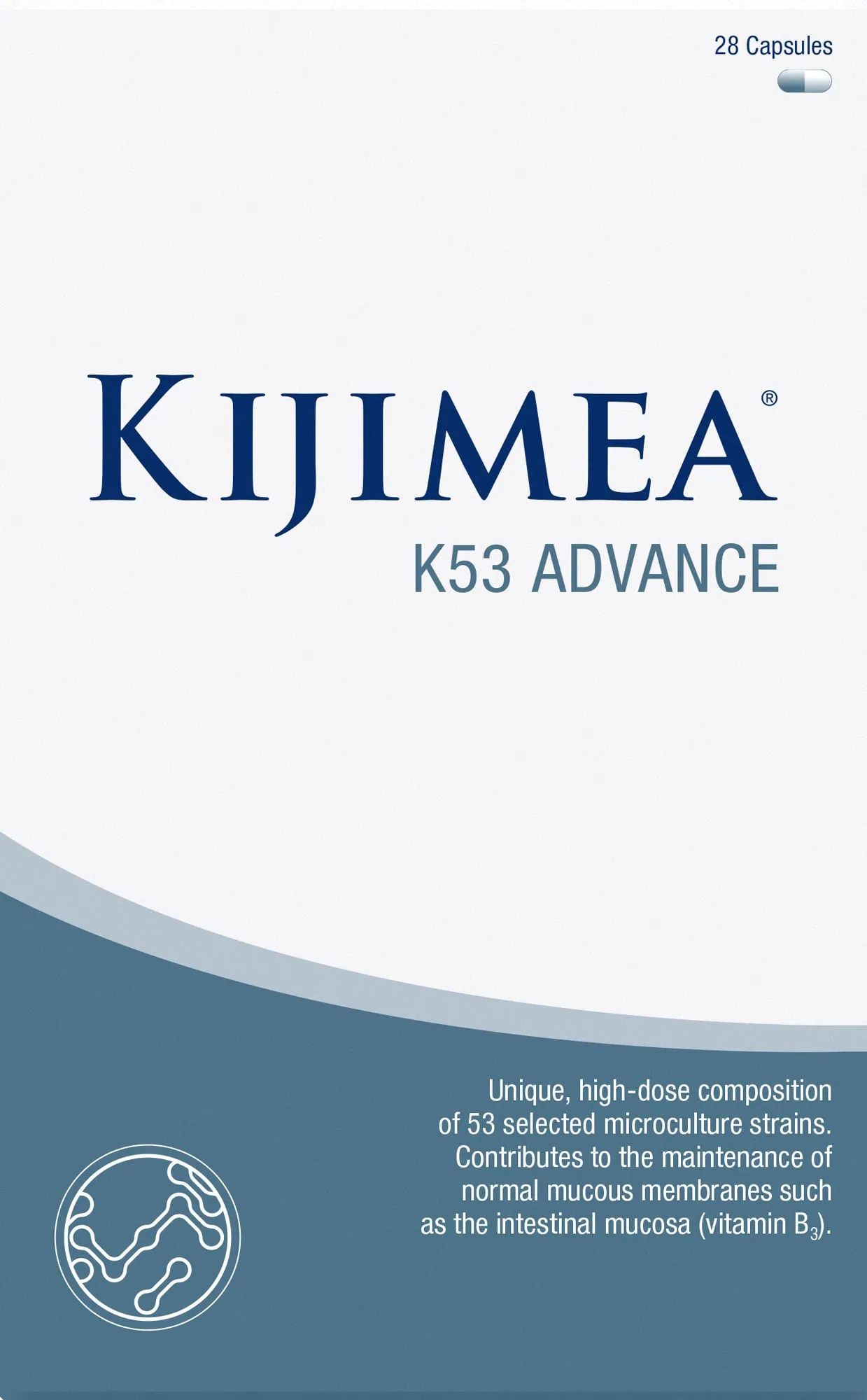
Kijimea K53 Advance
Advantages

The manufacturer is known in medical circles for its research and innovations.
Just one easy-to-swallow capsule covers the daily dose.
The product is gluten-, fructose- and lactose-free and free from additives, preservatives, flavourings and sweeteners.
Disadvantages

The manufacturer recommends using the product over a longer stretch of time.
Kijimea K53 Advance is manufactured by the German brand SYNformulas, which is well established in bacterial research. Thanks to its own scientific research, which has even been published in the world-renowned specialist journal "The Lancet", this company enjoys a great reputation among medical experts. This is also evident when taking a closer look at the product: with 53 bacterial strains, K53 Advance offers the greatest variety.
In addition, the product has one of the highest dosages (20 billion CFU) and also contains both biotin and niacin to support the intestinal mucosa. The packaging in an aluminium/aluminium blister corresponds to the gold standard, as it optimally protects each capsule from air and moisture from production to consumption.
In addition, both the manufacturing process and the facilities on which the preparation is produced are GMP-certified in accordance with the strict pharmaceutical grade standard.
What particularly caught our eye during our research on this product are the numerous extremely positive customer reviews that underline our own impression of the product. Here are some examples:

Andrew B.

'I'm thrilled with the positive change. I highly recommend it to everyone. From fast shipping to fast results, it's GREAT!'
Fiona G.
'I've been looking for a probiotic that is produced and packaged to the highest scientific standards for a long time. If you look into it a little, it quickly becomes clear that Kijimea simply has a different quality standard than others – I'm super satisfied!!!'
Joanne M.
'I've been taking the product for a few weeks now and I already feel much better. I've also given it to a friend.'
Kijimea K53 Advance convinces across the board and therefore deservedly takes first place with 95 points.
Particularly impressive: the product contains 53 different bacterial strains, more than ten times as many as the product in second place.
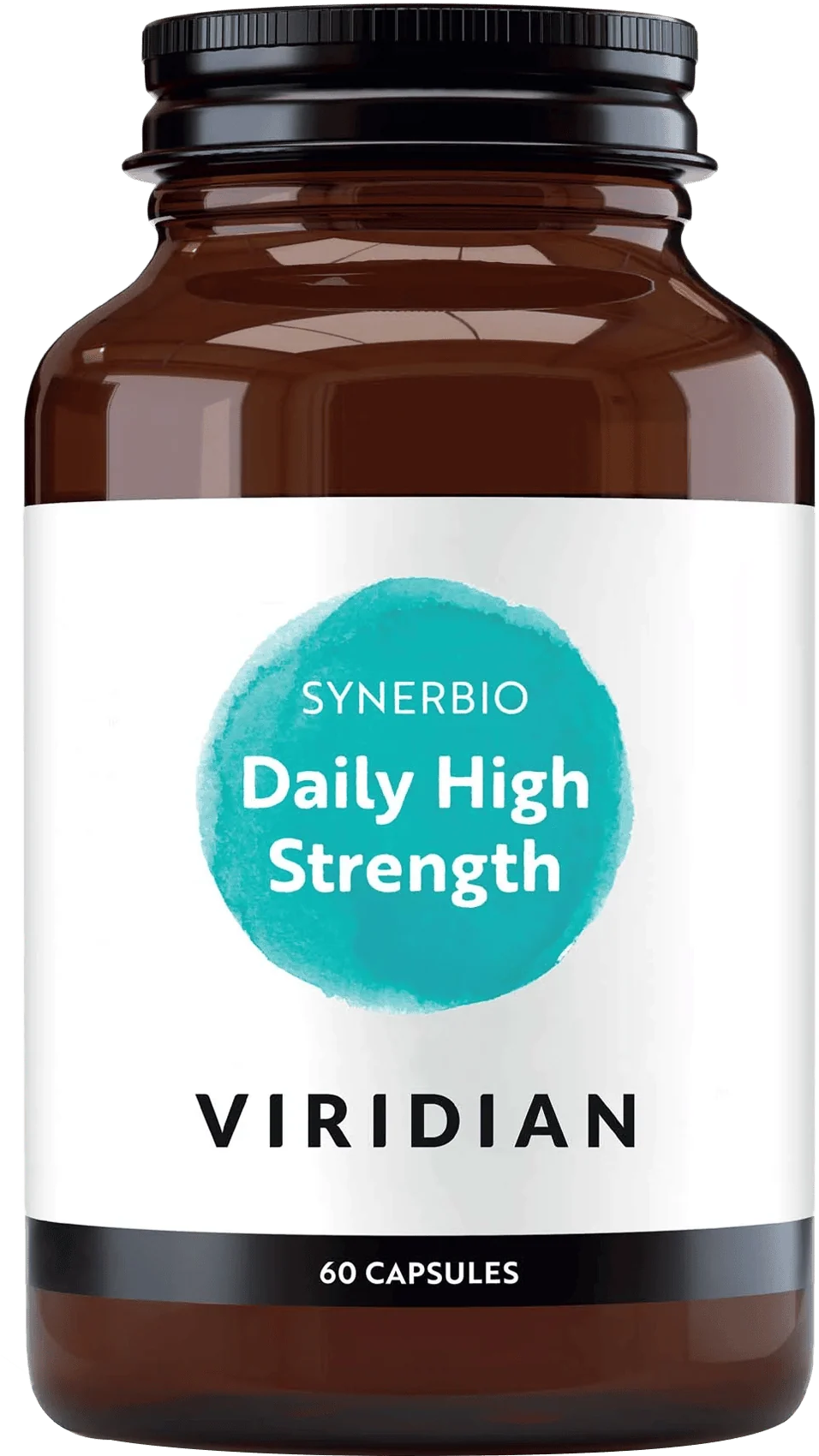
Synerbio Daily High Strength
Advantages
Manufacturer mentions strain specificity.
High dosage.
Disadvantages
With four different bacterial strains, the diversity is too low.
Contains no ingredients to strengthen the intestinal mucosa.
The capsules from Synerbio share the high dosage of the test winner - but the 20 billion CFU are distributed across four instead of 53 different strains. Compared to the diversity of the human microbiome, this is a rather small number – however, the manufacturer laudably provides the strain specification.
Furthermore, the manufacturer did not add ingredients that specifically address the intestinal mucosa. On the other hand, the GMP certification, which promises compliance with high production standards, should be emphasised positively.
With FOS and Inulin, the product contains two different prebiotics, which serve as food for the bacteria, but it should be mentioned that Inulin can lead to flatulence. Although the packaging in the glass bottle offers better protection than a plastic container, it does not change the problem that air and thus moisture can get into the packaging every time it is opened.
All in all, Daily High Strength scored 45 points, securing second place behind the test winner Kijimea K53 Advance.
Although the product offers a sufficiently high dosage, the diversity of 4 strains is much lower than many of its competitors.
Buy Synerbio Daily High Strength online
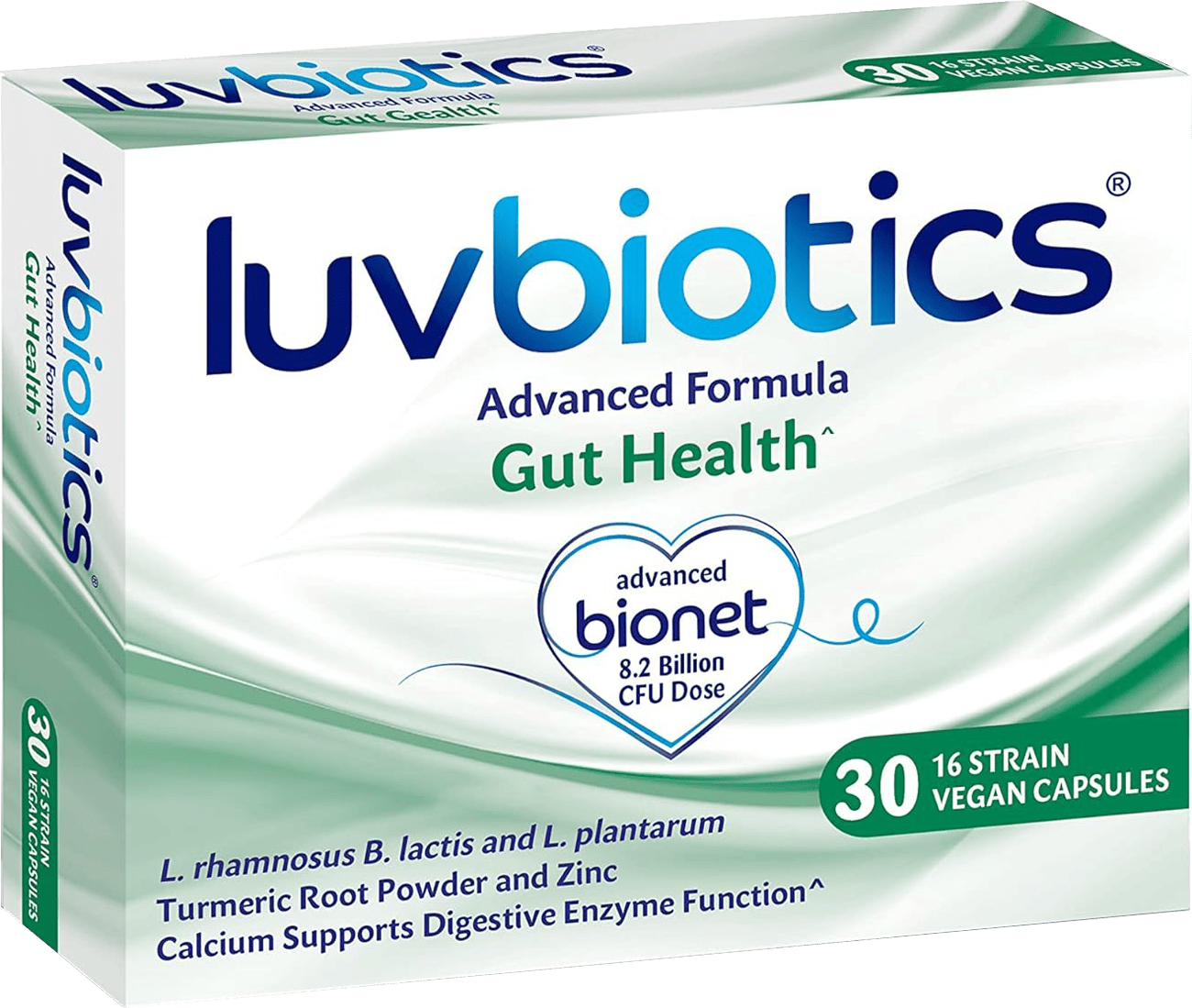
luvbiotics Advanced Formula Gut Health
Advantages
Mention of the strain specificity.
The capsules are vegan, gluten-free and free from artificial flavourings and preservatives.
Disadvantages
The dosage is too low.
The manufacturer does not have GMP certification.
At first glance, luvbiotics looks very promising thanks to their 16 bacterial strains - and thus the second highest diversity after the test winner – even with the packaging in a plastic blister. Even though an aluminium-aluminium blister promises even better protection than a plastic blister, the individual packaging still protects the contents far better than a plastic container.
However, there are also significant disadvantages: First of all, the product only contains the low dosage of 8.2 billion CFU per day - a far cry from the recommended 20 billion CFU. GMP certification is also lacking, as are substances to support the intestinal mucosa. However, the addition of zinc and calcium, which is important for the function of the digestive enzymes, should be mentioned positively here.
With 30 points, luvbiotics came in third.
Although the product contains 16 different strains, the dosage is too low.
Buy luvbiotics Advanced Formula Gut Health online
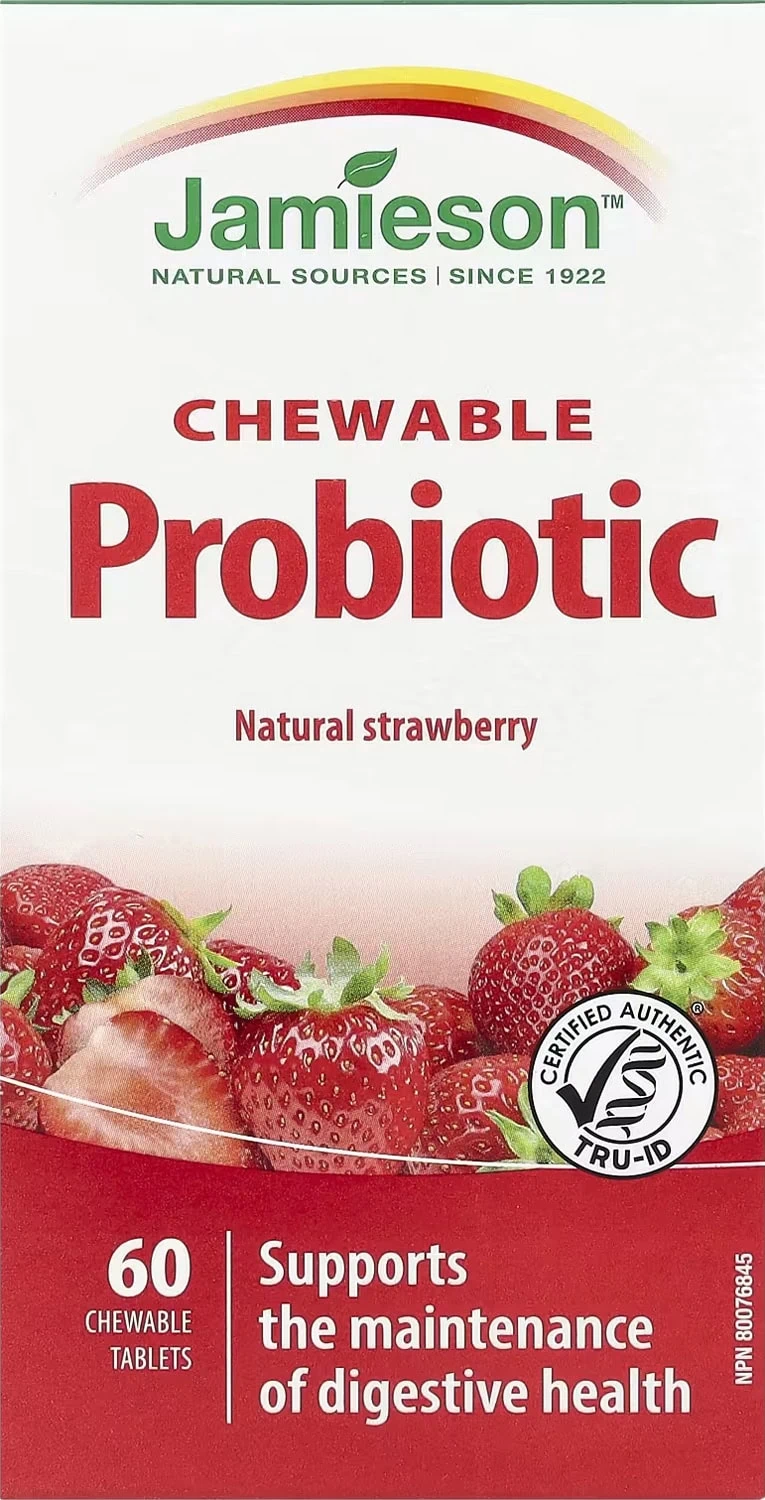
Jamieson Chewable Probiotic
Advantages
Pleasant to consume as the tablets can be chewed.
Mentions strain specificity.
Disadvantages
Contains the lowest dosage of all products tested.
Contains sugar.
Chewable Probiotic is the only product that is not swallowed in capsule form but consumed in the form of chewable tablets. This may be an advantage for people who have difficulty swallowing capsules, but this form brings with it another problem: the flavour becomes relevant. For this reason, the manufacturer has added natural strawberry flavouring, but also sugar.
The product contains five different bacterial strains in the lowest dosage of 2 billion CFU among the products compared here. The manufacturer commendably states the strain specificity, though. The packaging in the plastic container is not ideal, as it does not adequately protect the contents from penetrating air and moisture. Ingredients that are specifically intended to support the intestinal mucosa are not included. The GMP certification can be seen as a real plus point, as it promises high production standards.
The chewable probiotics achieve a total of only 25 points and thus rank fourth.
Although they may be able to convince one or two strawberry fans thanks to their strawberry-flavoured chewable form, both the diversity and dosage are too low to achieve a real effect on the gut microbiome.
Buy Jamieson Chewable Probiotic online
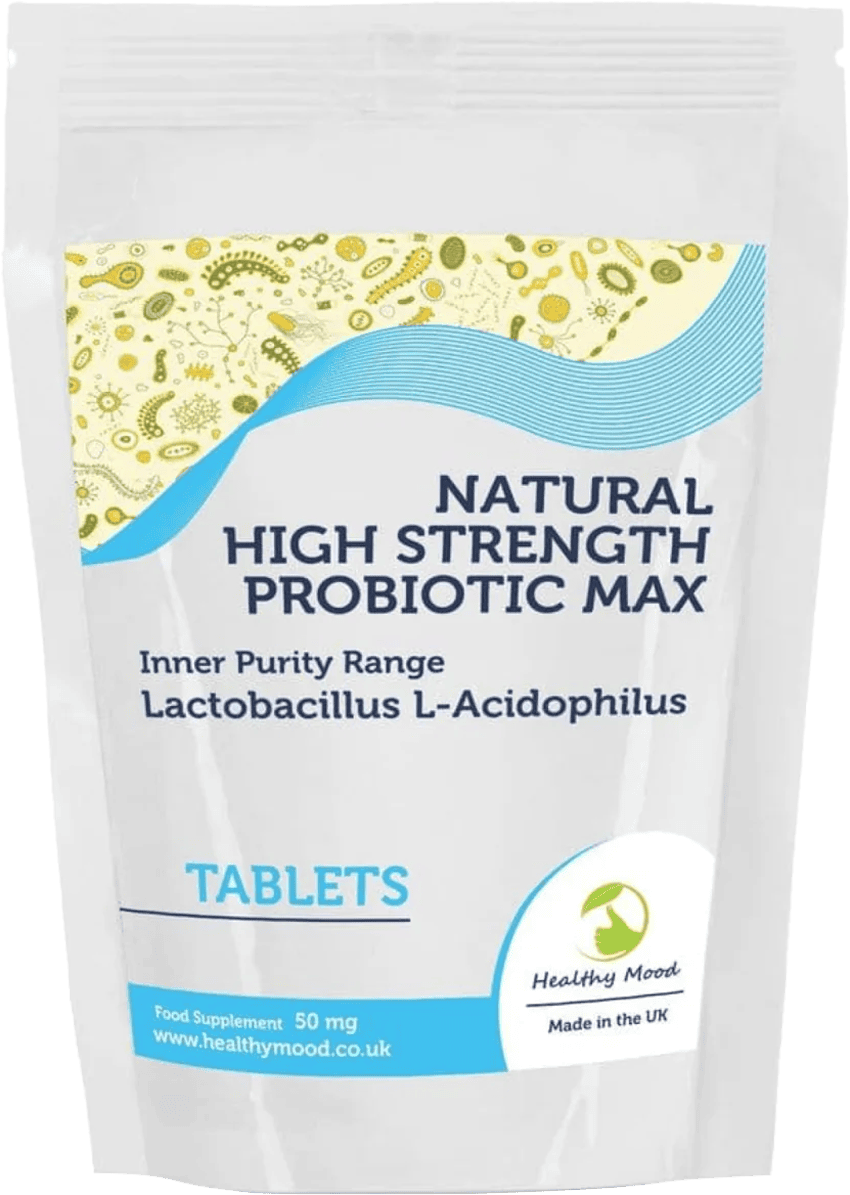
Healthy Mood Natural High Strength Probiotic Max
Advantages
At 20 billion CFU, the dosage is high.
Disadvantages
One bacterial strain is not sufficient for such a preparation.
The packaging is not ideal.
The capsules from Healthy Mood do not prove sufficient with regard to several of the key qualities a probiotic should have. The only highlight is the dosage of 20 billion CFU per capsule. On the other hand, the product contains a single bacterial strain, but does not mention the strain specificity. Ingredients that are explicitly intended to support the intestinal mucosa are absent, as is GMP certification.
The product can be purchased either in a bag or in a plastic container; neither is ideal, as neither is suitable for optimally protecting the contents from penetrating air and moisture.
With a mere 20 points, the capsules from Healthy Mood came in last.
Although they scored in the higher range for dosage, they disappointed in all other areas.
Buy Healthy Mood Natural High Strength Probiotic Max online
Conclusion
The intestine is currently the focus of medical research - and rightly so, we think!
Recent research findings already suggest that even weight problems are in many cases linked to a disturbed or weakened gut microbiome and that targeted manipulation of the microbiome can change the way the body processes food.
Microculture preparations can therefore provide valuable support in many cases of weight problems. However, a closer look reveals that there are enormous differences in quality between the products on the market.
It is therefore particularly important to obtain comprehensive information before making a purchase.
1Basis of grading number of strains:
- 100 points ≥ 51 strains
- 75 points ≥ 31 strains
- 50 points ≥ 16 strains
- 25 points ≥ 6 strains
- 0 points < 6 strains
2Basis of grading of daily dosage:
- 100 points ≥ 30 billion CFU/daily intake
- 75 points ≥ 20 billion CFU/daily intake
- 50 points ≥ 10 billion CFU/daily intake
- 25 points ≥ 5 billion CFU/daily intake
- 0 points < 5 billion CFU/daily intake
Ipsos: More than 4 in 10 Britons are trying to lose weight, focusing on dieting and exercise. https://www.ipsos.com/en-uk/more-4-10-britons-are-trying-lose-weight-focusing-dieting-and-exercise last accessed 13.02.2025
Wing, R. Phelan, S "Long-term weight loss maintenance", The American Journal of Clinical Nutrition, Volume 82, Issue 1, 2005, Pages 222S-225S, doi: 10.1093/ajcn/82.1.222S.
Turnbaugh, P et al. An obesity-associated gut microbiome with increased capacity for energy harvest. Nature 444, 1027-1031 (2006). https://doi.org/10.1038/nature05414
Ogawa, Akihiro et al. "Lactobacillus gasseri SBT2055 suppresses fatty acid release through enlargement of fat emulsion size in vitro and promotes fecal fat excretion in healthy Japanese subjects." Lipids in health and disease vol. 14 20. 20 Mar. 2015, doi:10.1186/s12944-015-0019-0
Osterberg, Kristin L et al. "Probiotic supplementation attenuates increases in body mass and fat mass during high-fat diet in healthy young adults." Obesity (Silver Spring, Md.) vol. 23,12 (2015): 2364-70. doi:10.1002/oby.21230
As an Amazon Associate, we earn from qualifying sales.
The information on this page does not constitute medical advice and should not be considered as such. Consult your doctor before changing your regular medical care. This product is not intended to diagnose, treat, cure or prevent any disease. The effect depends on individual factors. The images of those affected are based on real people whose names have been changed.