

Content
Typical ADHD medicationThe gut-brain axisCurrent study resultsA new research approachMilestone in microbiome researchWhen children behave "outside the norm", this quickly reflects on their parents and their parenting skills. However, it is now widely accepted that children develop in very different ways and have different temperaments. But when doing homework together becomes a nightmare or an afternoon of fun at the playground does not result in the hoped-for calm, the ADHD card is quickly played.
This puts considerable social pressure on parents, who are already concerned, to do something about the supposed problem. But what options are there?
Conventional approaches to ADHD usually focus on medications that increase the concentration of neurotransmitters, i.e. messenger substances such as dopamine and noradrenaline, in the brain. This is intended to regulate attention, impulse control and motivation.
These often have various side effects: loss of appetite, weight loss, sleep disorders and headaches are just some of the possible side effects.
This is precisely why research has pursued new and unusual approaches in recent years. One of these has brought an unexpected connection into focus that could change everything for people with ADHD: the relationship between ADHD and the gut.
But what does our digestive organ have to do with behavioural disorders? To answer this question, we first need to take a closer look at what exactly the term "ADHD" means.
The brain and the gut: a close-knit team
Attention deficit disorder (ADD) or attention deficit hyperactivity disorder (ADHD) is one of the most common psychiatric disorders in children and adolescents, affecting around 5 per cent of all children and adolescents in the UK.1
Often referred to colloquially as "fidgety philip syndrome", ADHD mainly manifests itself through hyperactivity, attention problems and impulsivity. From difficulties in nursery and school to challenges in interpersonal relationships to problems with organisation and time management in everyday life and at work – people with ADHD face challenges at every age in our standardised society.
However, even minor behavioural issues such as excessive energy, slight inattentiveness or occasional impulsiveness can cause uncertainty among parents, especially when their children are young.
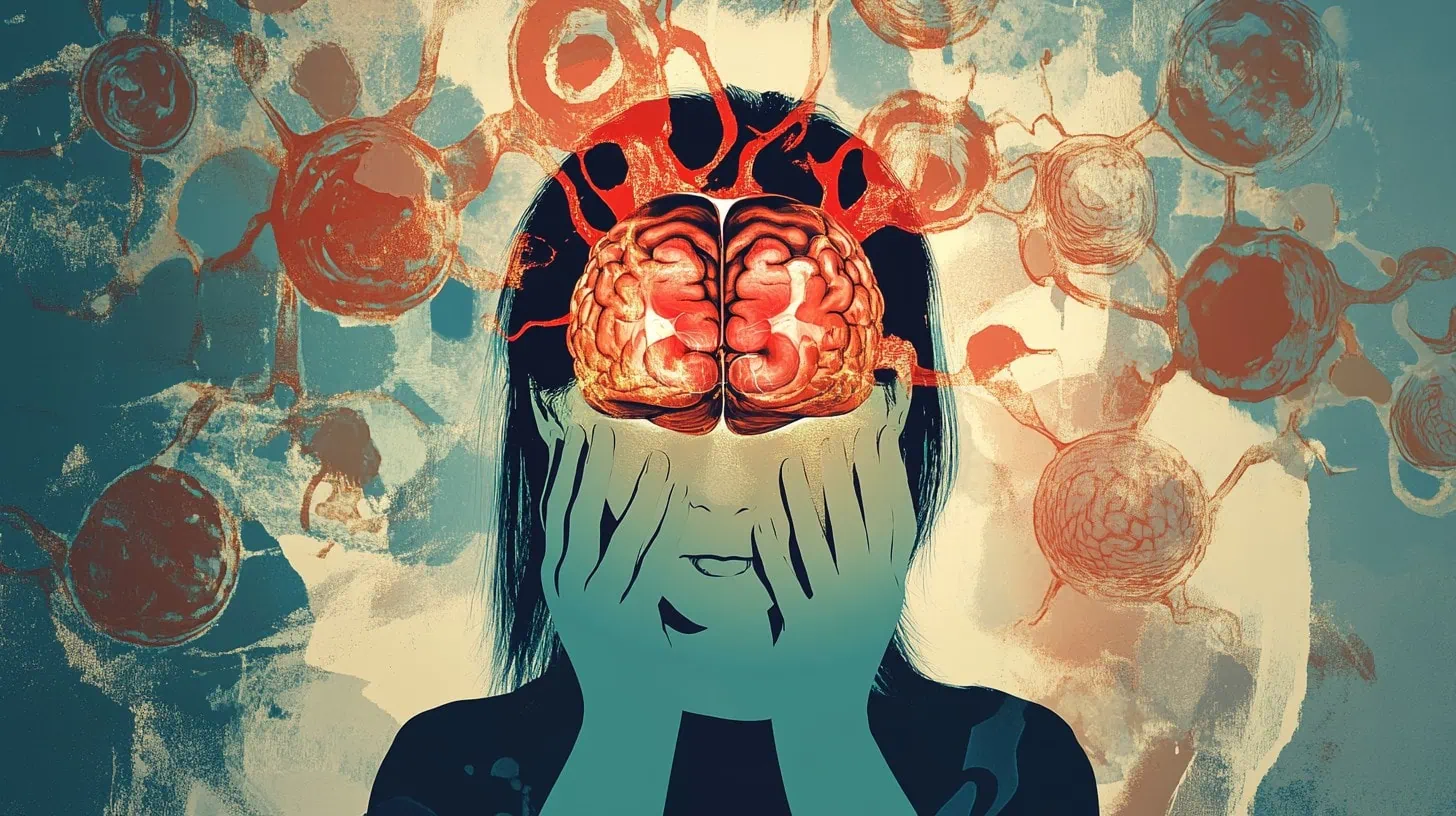
ADHD is considered a complex disorder influenced by a variety of factors, including genetic, neurobiological and environmental factors. Despite many years of research, the exact sequence of pathological events underlying ADHD is not yet fully understood.
The connection between the gut and the development of ADHD is a very recent discovery. Strictly speaking, this relationship takes place between the brain and the bacteria living in the gut. This bacterial ecosystem is also called the microbiome.
It consists of trillions of bacteria that populate the intestinal wall. Scientists currently assume that this structure is composed of over 100 different bacterial strains. The fascinating thing about this is that countless studies since the early 2000s have determined the incredible importance of the gut microbiome for almost all areas of our health and well-being.
This includes, above all, its fundamental role within the immune system. In addition to our defences, the microbiome influences numerous organs – including the brain.
It is the so-called gut-brain axis that is of particular interest to researchers in connection with ADHD. This is because the brain and gut are in close communication with each other via neurological (i.e. nervous) and hormonal channels, as well as through immune responses.
However, this connection is not a one-way street: on the one hand, the brain controls intestinal functions, but on the other hand, recent studies show that the gut can influence mood, cognitive functions and mental health.
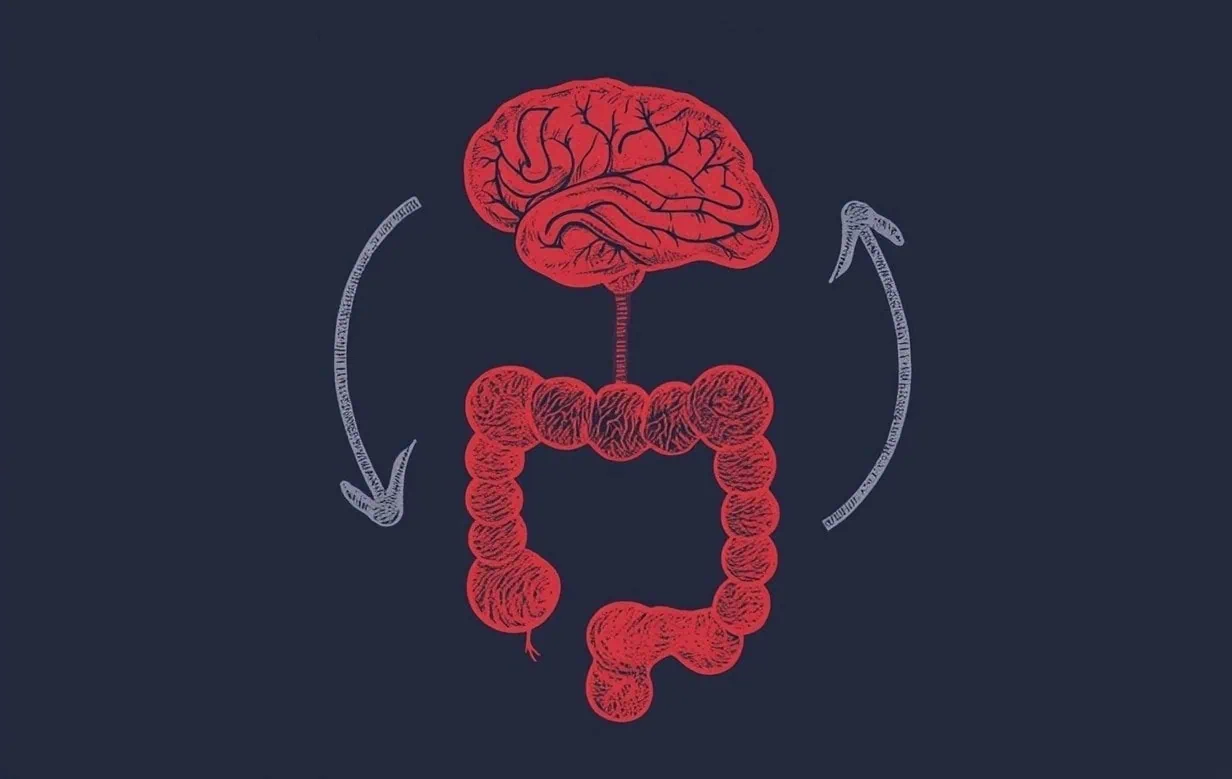
When the microbiome is balanced, i.e. when bacteria are present in a precisely balanced quantitative and qualitative ratio, we usually do not notice its significance. Only when this balance is disrupted can problems arise.
This condition is also known as dysbiosis. The question scientists asked themselves in connection with the gut-brain axis was: "Could this also be a factor in ADHD?"
Studies that make ADHD sufferers sit up and take notice
To find out, a German research team at the University of Kiel conducted a study in which stool samples were used to examine the gut microbiome of children with ADHD.
In order to obtain the clearest possible results, the scientists, led by professor and psychologist Alexander Prehn-Kristensen, ensured that all children met comparable criteria in terms of demographic data such as age, weight, origin and place of residence, as well as their dietary habits and medication intake.

The results were striking: children with ADHD were found to have significantly less diversity and an imbalance of bacteria in their gut microbiome compared to children without ADHD.2
Could it really be that bacteria are "complicit" in behavioural deviations? Scientists provided a plausible explanation for this:
The gut microbiome produces various neurotransmitters that have a direct influence on brain function. Neurotransmitters are chemical messengers in the body that transmit signals from nerve cells to target cells. They thus play a crucial role in the nervous system and regulate numerous bodily functions such as digestion, mood, concentration, appetite and muscle movement.
These include serotonin, also known as the "happiness hormone". It plays a central role in social-emotional behaviour – among other things, it is responsible for regulating mood, information processing and our well-being. A lack of serotonin can lead to disturbances in emotional regulation and general well-being.
Since the gut microbiome is significantly involved in the production of neurotransmitters such as serotonin, dysbiosis can also influence brain function and behaviour – and thus play a role in developmental and behavioural disorders such as ADHD.
To test this, researchers led by renowned Professor Tomokazu Hata at Kyushu University in Japan conducted an experiment. They compared mice with an intact gut microbiome with mice that did not have their own microbiome. The result: they found that the serotonin concentration was greatly reduced in the bacteria-free mice.
In the next step of the experiment, the Japanese scientists administered a microculture preparation to the gut bacteria-free mice. What happened next took them by surprise: within just three days, the animals' serotonin levels rose significantly!
This enabled them to demonstrate that changes in the gut microbiome affect serotonin levels3 – and thus also on the onset and severity of behavioural abnormalities associated with ADHD.
It therefore appears that, even though various mechanisms of action are still being investigated, it seems certain that the gut microbiome plays an important role in neuropsychiatric developmental and behavioural disorders such as ADHD.
Many other studies underscore this connection, which raises the question: Are there approaches that target the microbiome directly and could thus have a positive impact on the clinical picture of those affected?
A revolutionary research approach comes from Germany
This is a question that prompted a team of researchers from Germany to take action. They closely examined the existing studies, analysed the results and came up with three groundbreaking hypotheses:
High bacterial diversity is key
In order to get closer to the results of the studies, a preparation must be developed that mimics the natural human microbiome in terms of bacterial diversity.
The healthy human gut is colonised by over 100 bacterial species, which is why a suitable preparation must contain a high diversity of strains.
An exceptionally high dosage is important
Although figures such as 2, 4 or 10 billion colony-forming units (CFU) sound very impressive at first glance, according to current research, a healthy intestine contains 10 to 100 trillion bacteria. Preparations with too low a dosage are therefore not significant enough to actually bring about a change.
Therefore, products that are designed for long-term consumption should contain at least 20 billion CFU.
The exact selection of bacteria is crucial
Not all bacteria are the same. Even closely related bacteria can have fundamentally different properties.
This means that when selecting bacterial strains, careful attention must be paid to which specific bacterial strains are added to the product.
1Stiebahl S, House of Commons Library (2025): Insight. FAQ: ADHD statistics (England). last checked 23 October 2025
2Prehn-Kristensen A, Zimmermann A, Tittmann L, Lieb W, Schreiber S, Baving L, et al. (2018) Reduced microbiome alpha diversity in young patients with ADHD. PLoS ONE 13(7): e0200728. https://doi.org/10.1371/journal. pone.0200728
3Hata T, Asano Y, Yoshihara K, KimuraTodani T, Miyata N, Zhang X-T, et al. (2017) Regulation of gut luminal serotonin by commensal microbiota in mice. PLoS ONE 12(7): e0180745. https://doi.org/10.1371/journal.pone.0180745
4Tengeler AC, Dam SA, Wiesmann M et al. Gut microbiota from persons with attention-deficit/hyperactivity disorder affects the brain in mice. Microbiome 8, 44 (2020). https://doi.org/10.1186/s40168-020-00816-x
Banerjee E, Nandagopal K. Does serotonin deficit mediate susceptibility to ADHD? Neurochem Int. 2015 Mar;82:52-68. doi: 10.1016/j.neuint.2015.02.001. Epub 2015 Feb 12. PMID: 25684070.
Federal Ministry of Health. Attention deficit disorder. As of January 2024. https://www.bundesgesundheitsministerium.de/themen/praevention/kindergesundheit/aufmerksamkeitsdefizitsyndrom
Kijimea K53 Advance – as unique as the intestine
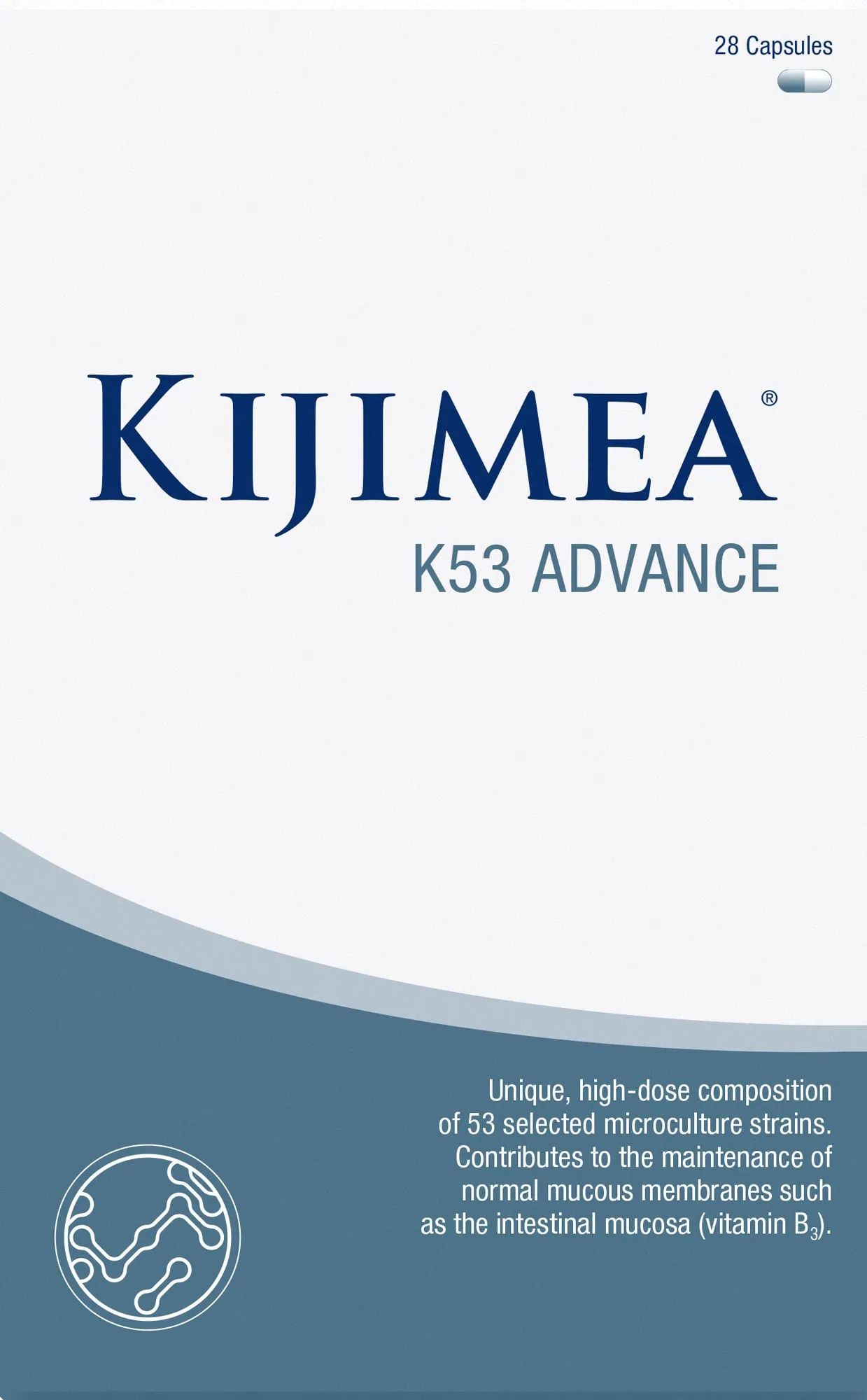
For over 10 years, the German company SYNformulas has been researching products in this field, which are marketed under the brand name Kijimea. With publications in renowned journals such as The Lancet, which underline the high scientific standard of Kijimea, the brand has already gained great recognition.
The research team developed a novel product called Kijimea K53 Advance, which is fundamentally different from other microculture preparations in three ways:
As its name suggests, Kijimea K53 Advance contains 53 different bacterial strains. This finally provided a product that attempts to mimic the diversity of the human microbiome.
The dosage is particularly high: Each Kijimea capsule contains a full 20 billion CFU – which means that a month's supply contains 600 billion bacteria! This corresponds to the amount of bacteria contained in no less than 25 kg of commercially available yoghurt.
The research team placed great emphasis on the careful selection of specific bacterial strains and the well-thought-out composition of the preparation. The result was a product with 53 hand-picked bacterial strains, which the researchers believe are optimally balanced.
Kijimea K53 Advance also contains the vitamin biotin, which supports the intestinal mucosa – the "breeding ground" for the bacteria supplied.
This carefully considered formulation has also been well received by consumers, as evidenced by the numerous enthusiastic customer reviews:

Andrew B.

'I'm thrilled with the positive change. I highly recommend it to everyone. From fast shipping to fast results, it's GREAT!'
Fiona G.
'I've been looking for a probiotic that is produced and packaged to the highest scientific standards for a long time. If you look into it a little, it quickly becomes clear that Kijimea simply has a different quality standard than others – I'm super satisfied!!!'
Joanne M.
'I've been taking the product for a few weeks now and I already feel much better. I've also given it to a friend.'
Kijimea K53 Advance can be conveniently ordered from the manufacturer's online shop at kijimea.co.uk. Customers also benefit from a money-back guarantee: the manufacturer is so confident in the quality of its products that it will refund the purchase price within the first 30 days to customers who, contrary to expectations, are not satisfied.

In addition, shipping is free on Kijimea.co.uk for purchases over £25.
Good to know: All Kijimea products are manufactured in Germany without the use of genetic engineering. Both the manufacturing process and the equipment used are GMP-certified according to pharmaceutical grade standards. In addition, each batch is tested in an independent laboratory before it goes on sale.
Kijimea K53 Advance
Buy Kijimea K53 Advance onlineThe information on this page does not constitute medical advice and should not be considered as such. Consult your doctor before changing your regular medical care. This product is not intended to diagnose, treat, cure or prevent any disease. The effect depends on individual factors. The images of those affected are based on real people whose names have been changed.