

Contents
Is the gut to blame for allergies?The gut microbiomeThe gut microbiome & allergiesFaecal transplantation for allergiesWhat makes a good microculture preparation?Our test resultsNo sooner is the cold season drawing to a close than more and more Brits are immediately gearing up for a battle against another invisible foe: pollen. In GB alone, millions of people suffer from itchy eyes, a blocked nose, sneezing fits, exhaustion and, in some cases, even asthma-like symptoms – and the trend is rising!
Summary
- Scientists worldwide agree: the composition of bacteria in the gut influences the development of allergies.
- Many people take so-called probiotics to specifically introduce gut bacteria.
- Test winner: Kijimea K53 Advance.
Go directly to the test
Alongside antihistamines and symptom-specific treatments such as nasal sprays or eye drops, more and more sufferers are looking for alternative solutions – and in doing so are coming across an approach that suggests a link to a surprising organ: the gut!
To understand this surprising connection, it is necessary to take a closer look at the processes taking place in our body as it battles against pollen and grasses.
In short, an allergy is a malfunction or overreaction of the immune system. It mistakenly interprets harmless substances, such as microscopic pollen, as a potential threat and switches to defence mode. This triggers a strong immediate reaction. In the process, the immune system releases a substance produced by the body called histamine, which ultimately manifests itself in the typical allergy symptoms.
But the question arises: what role does the gut play in this?
Is the gut to blame for allergies? What science says
To answer this question, we need to look back over 30 years. At that time, it had already been noted with concern that the proportion of people with allergies in the general population was continuing to rise. The theory presented in 1989 by a professor named David Strachan caused a correspondingly large stir – not least because of its rather paradoxical-seeming basic premise:
He posited that improved hygiene conditions were responsible for the rising number of allergy sufferers. According to this theory, children are coming into contact with germs less and less frequently and experiencing fewer infections, to which the immune system reacts with allergies – in short: children are now too healthy and are consequently developing allergies.
So is the answer to the question of how allergies can be curbed ‘more illnesses’? Is humanity stuck between a rock and a hard place?

In the search for answers, a series of further studies investigated the link between exposure to bacteria and the development of allergies. And lo and behold: Strachan’s hygiene hypothesis initially appeared to be borne out.
It was found that children born by caesarean section have a fivefold higher risk of developing allergies later in life compared to children born vaginally. Here too, the explanation is attributed to bacteria: during a vaginal birth, a baby comes into contact with various bacteria in the birth canal, whereas with a caesarean section, it moves from the ‘germ-free’ womb directly into a delivery room that is also more or less germ-free; contact with bacteria: none.
A similar picture emerged from the Europe-wide GABRIEL study. It showed that farm children, who naturally come into contact with a wide variety of bacteria more often, are far less likely to suffer from hay fever or allergic rhinitis than city children.
So has Strachan, with his theory, managed to crack the allergy code?
The gut microbiome – a delicate balance with far-reaching consequences
Although Strachan’s idea provides an important foundation for further research, more precise connections were only discovered years later – such as the vital role played by the gut microbiome in this context.
The gut microbiome refers to the totality of living microorganisms (mainly bacteria) in the gut. They form a complex ecosystem, similar to a tropical rainforest. It, too, can only thrive if all the organisms living within it are in harmony with one another.
If, for example, one plant species becomes overgrown, this can disrupt the entire balance. These factors can also be applied to the gut microbiome, which, according to current research, consists of up to 100 trillion bacteria! The bacteria can be divided into different strains – just as the plant species in the example above each have different characteristics and functions.
Unfavourable external influences, such as an unbalanced diet, stress or certain medications, can lead to some bacterial strains becoming more prevalent, thereby suppressing others or even causing the total number of gut bacteria to decline.
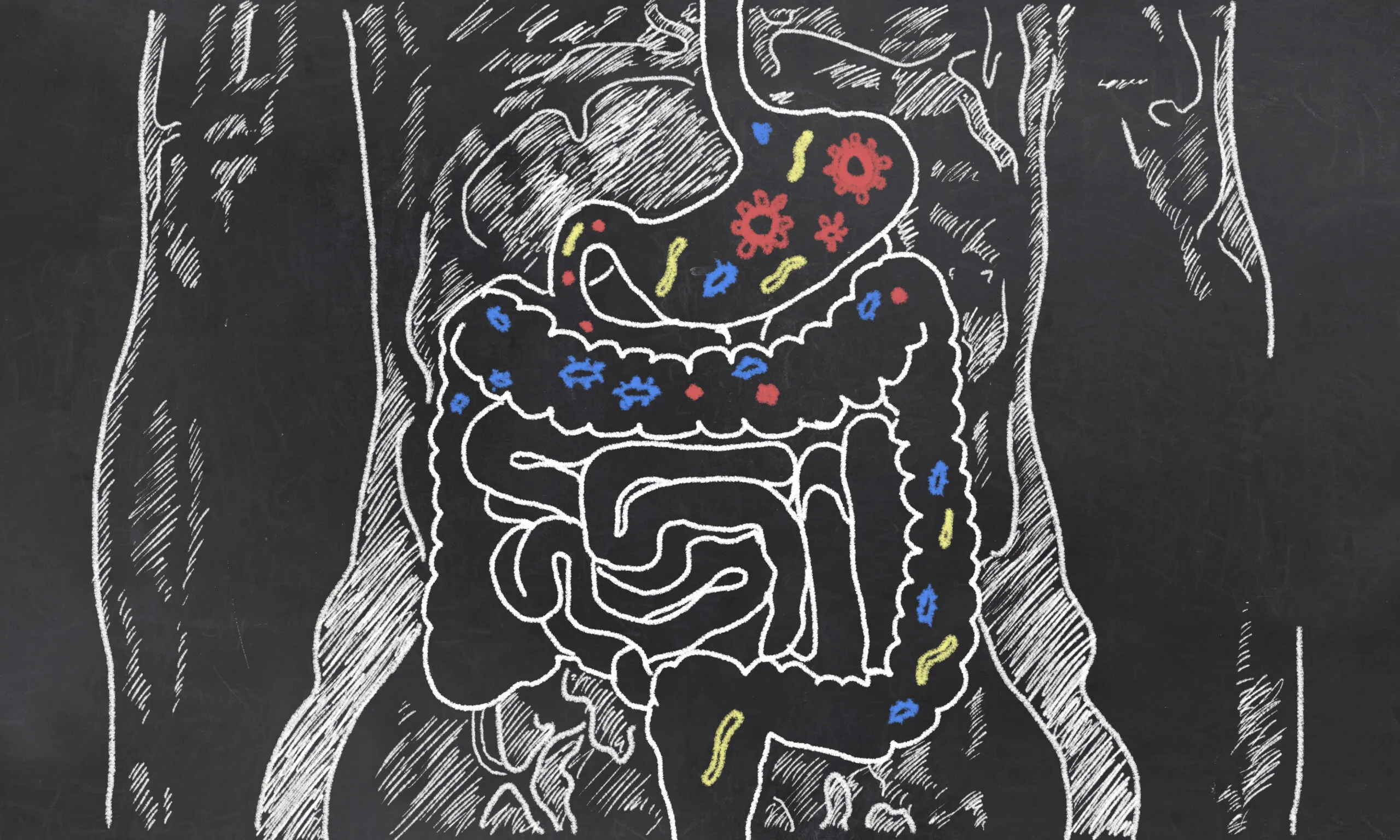
The resulting imbalance is scientifically referred to as dysbiosis.
According to studies, such dysbiosis has so far been linked to symptoms such as fatigue, obesity and a compromised immune system – and possibly also to allergies? Could the lower prevalence of allergies among children born naturally or raised on a farm be due to their gut microbiome developing more effectively as a result of contact with bacteria?
Gut microbiome and allergies – new scientific developments bring a breakthrough
Allergists – and those affected – had to wait quite some time for an answer to this question. Scientists took a first major step with the launch of the American Gut Project in 2012: technical advances had simplified and reduced the cost of whole-genome sequencing, meaning that, for the first time, a large volume of data on the gut microbiome could be collected and analysed.
This revealed that the microbiome of people with allergies differed significantly from that of unaffected individuals: not only did it contain a lower number of bacteria, but diversity was also markedly reduced. This closed the gap in Strachan’s hypothesis and demonstrated that the microbiome and allergies were indeed linked. The question of ‘whether’ had thus been answered – but the question of ‘how?’ continued to occupy researchers.
In 2020, a Japanese researcher named Shimon Sakaguchi finally made a breakthrough: he discovered what are known as regulatory T cells. These cells ensure that the immune system responds appropriately to certain substances; in other words, they are responsible for ensuring that the immune system reacts differently to a potential threat – such as a virus – than to a harmless substance – such as pollen.
But what does this have to do with the gut? Quite simply, these special cells are produced in the gut. However, if dysbiosis is present, it negatively affects the production of T cells, while a lack thereof can in turn promote allergic reactions.
To support this hypothesis, scientists conducted an experiment on mice: a group of so-called ‘germ-free mice’ – mice that had been isolated from germs since birth – were given the microbiome of allergy sufferers. The result: these mice also showed signs of allergies. Even more impressive was the reversal of this experiment: the now-allergic mice were subsequently given the microbiome of non-allergic mice. The result: the allergies disappeared. The link between the gut microbiome and allergies was thus clearly demonstrated!
In light of this groundbreaking discovery, the question now arises: how could these findings be used to help people with allergies – including humans? Should the microbiome of their non-allergic peers also be transferred to them? And how can a microbiome be transferred in the first place?
Faecal transplantation – the treatment of choice for allergies?
In principle, transferring one person’s microbiome to another is entirely possible – and has, in fact, been practised for over 1,000 years. As far back as 4th-century China, doctors administered the microbiome of healthy individuals to patients – via the oral administration of human faeces!
Although this procedure has been improved over the last millennium – nowadays, so-called faecal transplantation is carried out either via a tube directly into the small intestine or by taking capsules – it can hardly be described as a pleasant treatment. Furthermore, such treatment is not only very expensive but also associated with various health risks. For these reasons, it is only the treatment of choice in very exceptional cases.
But what if there were a way to help allergy sufferers achieve a balanced microbiome by other means – a way that, as far as possible, avoids human faeces, tubes, risks and excessive costs?
This is precisely the approach taken by so-called probiotics, i.e. preparations containing live micro-cultures that colonise the gut and are thus intended to correct dysbiosis. Currently, these pills and powders are experiencing a veritable hype on social media and elsewhere, making a name for themselves through aggressive advertising, sky-high promises and unbeatable special offers.
Without prior knowledge, it is almost impossible to separate the wheat from the chaff. For this reason, the SYNformulas team of experts has taken a close look at five products and assessed them using objective, scientific criteria.
What makes a good probiotic and which products fulfil our requirements?
In the course of their research, the expert team identified 5 key quality features and then tested 5 products for these features.
Quality characteristic 1: The number of bacterial strains contained
A good probiotic endeavours to come as close as possible to the composition of a balanced human intestinal microbiome. In principle, it should mimic a faecal transplant - but without the disgust factor. However, a human gut does not only harbour 3 to 10 different bacterial strains, but far more. Accordingly, it should contain at least 50 different strains.1
Quality characteristic 2: The dosage of colony-forming units
Although figures such as 2, 4 or 10 billion CFU sound very impressive at first, current research shows that a healthy gut contains 10 to 100 trillion bacteria. Preparations with too low a dosage are therefore not significant enough to actually bring about a change. Our expert recommends products with at least 20 billion CFU.2
Quality characteristic 3: Support for the intestinal mucosa
In order for the microcultures to colonise the intestine and do their work there, they need a suitable breeding ground: an intact intestinal mucosa. The problem is that the intestinal mucosa is often damaged, especially in the case of intestinal problems, which makes it difficult for the good bacteria to colonise.
In addition to bacteria, probiotics should therefore also contain substances that support the intestinal mucosa, such as the B vitamins niacin and biotin. A product containing at least two such substances will be awarded 100 points, whereas products containing one such substance will be awarded 50 points.
Quality characteristic 4: The stability of the packaging
The bacteria in a probiotic are put into a kind of hibernation during production by freeze-drying. When they come into contact with moisture, they "wake up". If suitable food sources are then available - which is the case in the intestine - the bacteria thrive. The problem is that many forms of packaging do not adequately protect the preparations from moisture.
For example, if capsules are not packaged individually but together in a plastic container or jar, the products come into contact with air or moisture every time they are opened. As a result, the bacteria can awaken too early, but then find no food in the capsule - and starve to death.
Plastic packaging is made even more difficult by the fact that the material does not completely keep out moisture: Tiny amounts of moisture can pass through the packaging. In these cases, it is therefore not uncommon for all the bacteria contained in the packaging to be dead by the time it is ingested.
Aluminium-aluminium blister packs, in which each capsule is individually embedded in an aluminium chamber and is therefore optimally protected, are regarded as the packaging gold standard.
Products with this kind of packaging will therefore receive full marks. In contrast, plastic blisters, while still offering single-unit packaging, are made from inferior materials. As a result, products with plastic packaging will only receive 75 points.
While the properties of glass are superior to those of plastic, glass bottles usually contain a greater number of capsules, which leads to them being in contact with air and therefore moisture with every opening. Glass bottles therefore are only "worth" 50 points. Plastic bottles on the other hand combine the disadvantages of glass bottles and plastic blisters and can therefore only be awarded 25 points.

Aluminium-aluminium blisters protect bacteria in their capsules optimally from moisture.
Quality characteristic 5: Quality standards and certification
Unfortunately, there are hardly any legal requirements for the production of probiotics. For this reason, many manufacturers advertise with certifications - but these often only cover a minimum standard. It is therefore particularly important to take a closer look at the certifications advertised.
Production according to GMP (Good Manufacturing Practice), the pharmaceutical grade production standard, ensures the highest standard. Only with GMP-certified manufacturers can consumers be sure that their products have been manufactured to this particularly high standard, which is why products with this certificate will be awarded 100 points, whereas products missing it will receive zero points.

Note: The term ‘probiotic’ is widely used, but may not be used to advertise a corresponding product.
The editorial team has instead opted for the more appropriate term ‘microculture preparation’.
Based on these criteria, we analysed 5 products and came to the following conclusion:

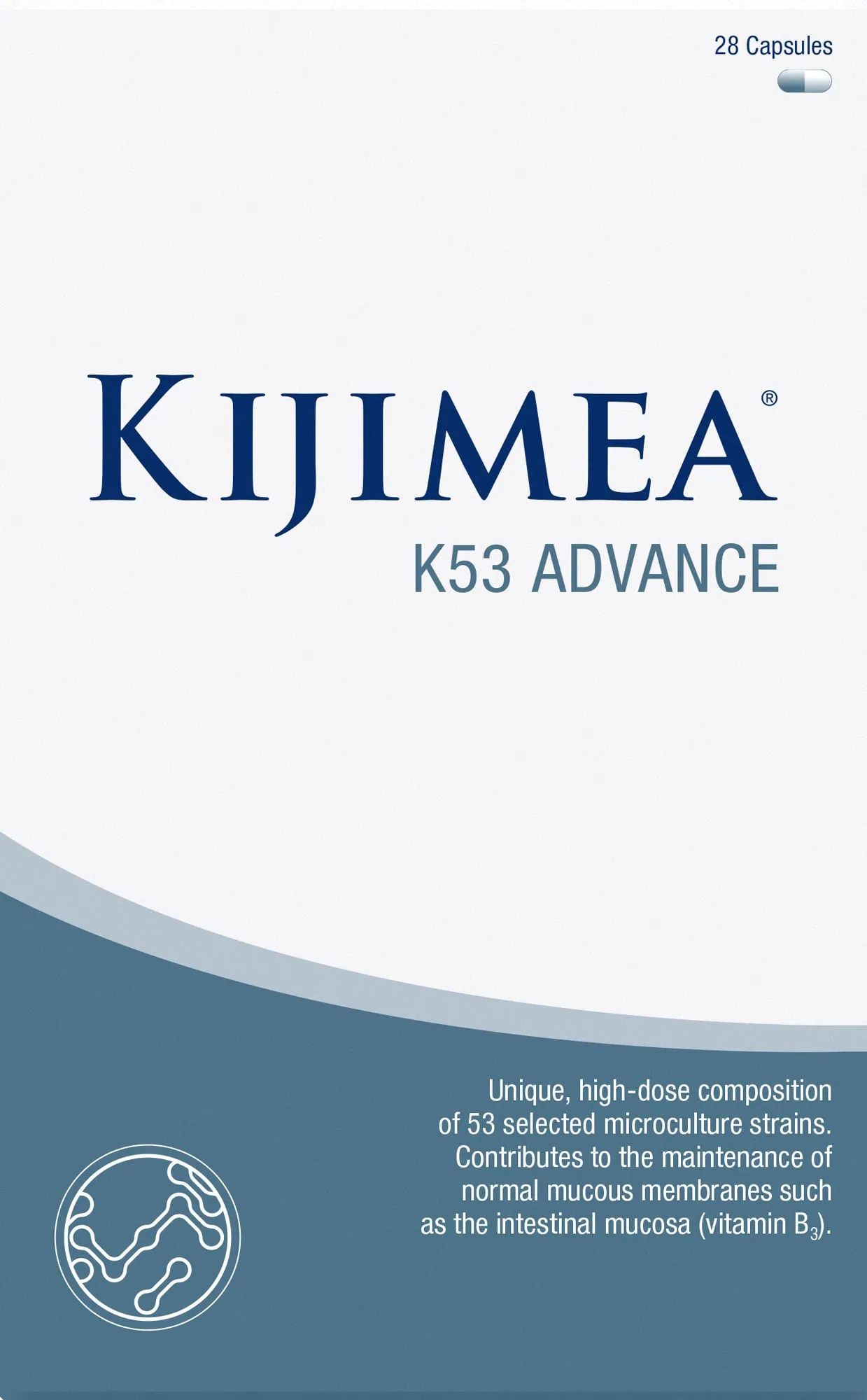
Kijimea K53 Advance
Advantages

The manufacturer is known in medical circles for its research and innovations.
Just one easy-to-swallow capsule covers the daily dose.
The product is gluten-, fructose- and lactose-free and free from additives, preservatives, flavourings and sweeteners.
Disadvantages

The manufacturer recommends using the product over a longer stretch of time.
Kijimea K53 Advance is manufactured by the German brand SYNformulas, which is well established in bacterial research. Thanks to its own scientific research, which has even been published in the world-renowned specialist journal "The Lancet", this company enjoys a great reputation among medical experts. This is also evident when taking a closer look at the product: with 53 bacterial strains, K53 Advance offers the greatest variety.
In addition, the product has one of the highest dosages (20 billion CFU) and also contains both biotin and niacin to support the intestinal mucosa. The packaging in an aluminium-aluminium blister corresponds to the gold standard, as it optimally protects each capsule from air and moisture from production to consumption.
In addition, both the manufacturing process and the facilities on which the preparation is produced are GMP-certified in accordance with the strict pharmaceutical grade standard.
What particularly caught our eye during our research on this product are the numerous extremely positive customer reviews that underline our own impression of the product. Here are some examples:

Andrew B.

'I'm thrilled with the positive change. I highly recommend it to everyone. From fast shipping to fast results, it's GREAT!'
Fiona G.
'I've been looking for a probiotic that is produced and packaged to the highest scientific standards for a long time. If you look into it a little, it quickly becomes clear that Kijimea simply has a different quality standard than others – I'm super satisfied!!!'
Joanne M.
'I've been taking the product for a few weeks now and I already feel much better. I've also given it to a friend.'
Kijimea K53 Advance convinces across the board and therefore deservedly takes first place with 95 points.
Particularly impressive: the product contains 53 different bacterial strains, more than ten times as many as the product in second place.
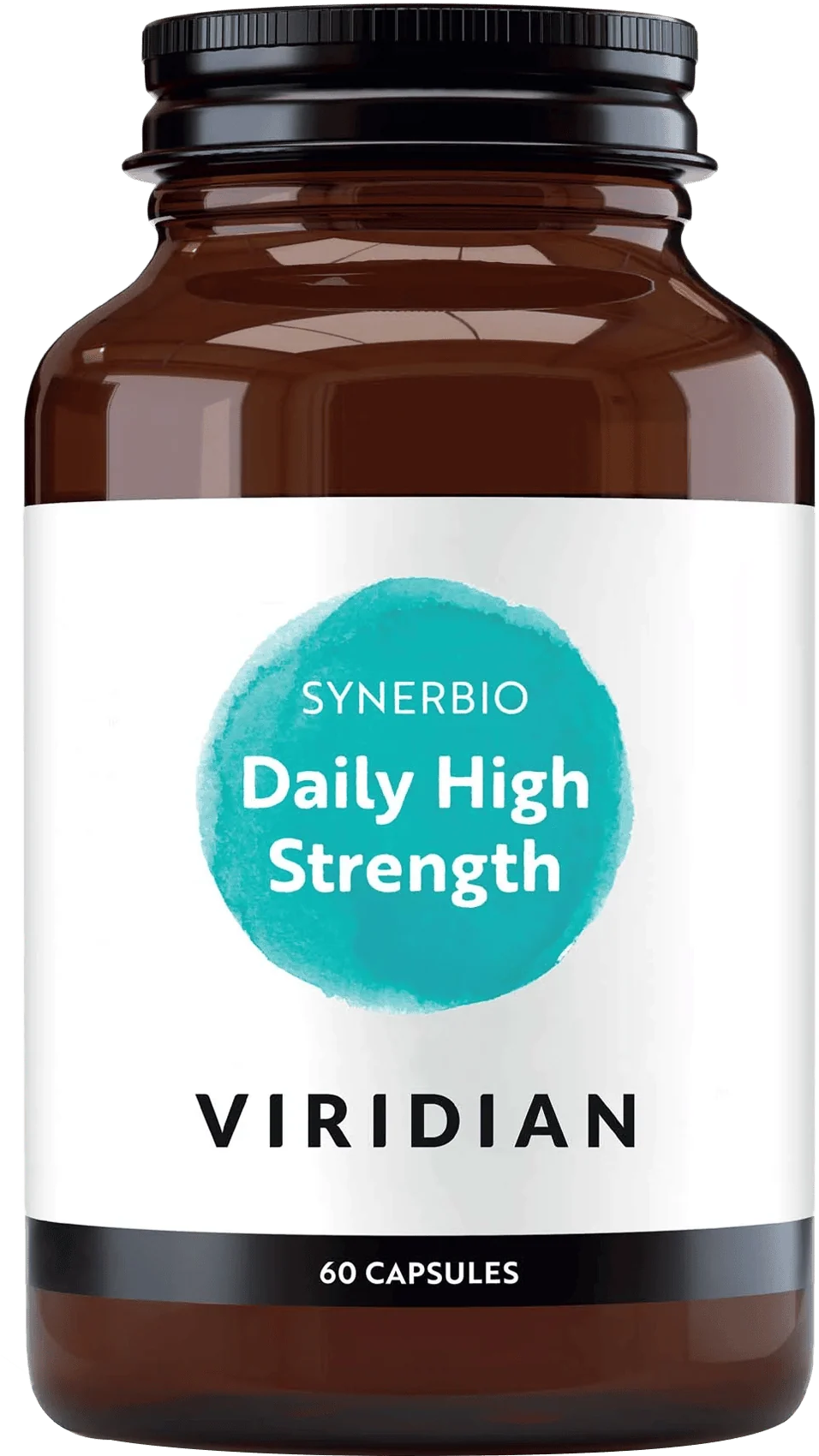
Synerbio Daily High Strength
Advantages
Manufacturer mentions strain specificity.
High dosage.
Disadvantages
With four different bacterial strains, the diversity is too low.
Contains no ingredients to strengthen the intestinal mucosa.
The capsules from Synerbio share the high dosage of the test winner - but the 20 billion CFU are distributed across four instead of 53 different strains. Compared to the diversity of the human microbiome, this is a rather small number – however, the manufacturer laudably provides the strain specification.
Furthermore, the manufacturer did not add ingredients that specifically address the intestinal mucosa. On the other hand, the GMP certification, which promises compliance with high production standards, should be emphasised positively.
With FOS and Inulin, the product contains two different prebiotics, which serve as food for the bacteria, but it should be mentioned that Inulin can lead to flatulence. Although the packaging in the glass bottle offers better protection than a plastic container, it does not change the problem that air and thus moisture can get into the packaging every time it is opened.
All in all, Daily High Strength scored 45 points, securing second place behind the test winner Kijimea K53 Advance.
Although the product offers a sufficiently high dosage, the diversity of 4 strains is much lower than many of its competitors.
Buy Synerbio Daily High Strength online
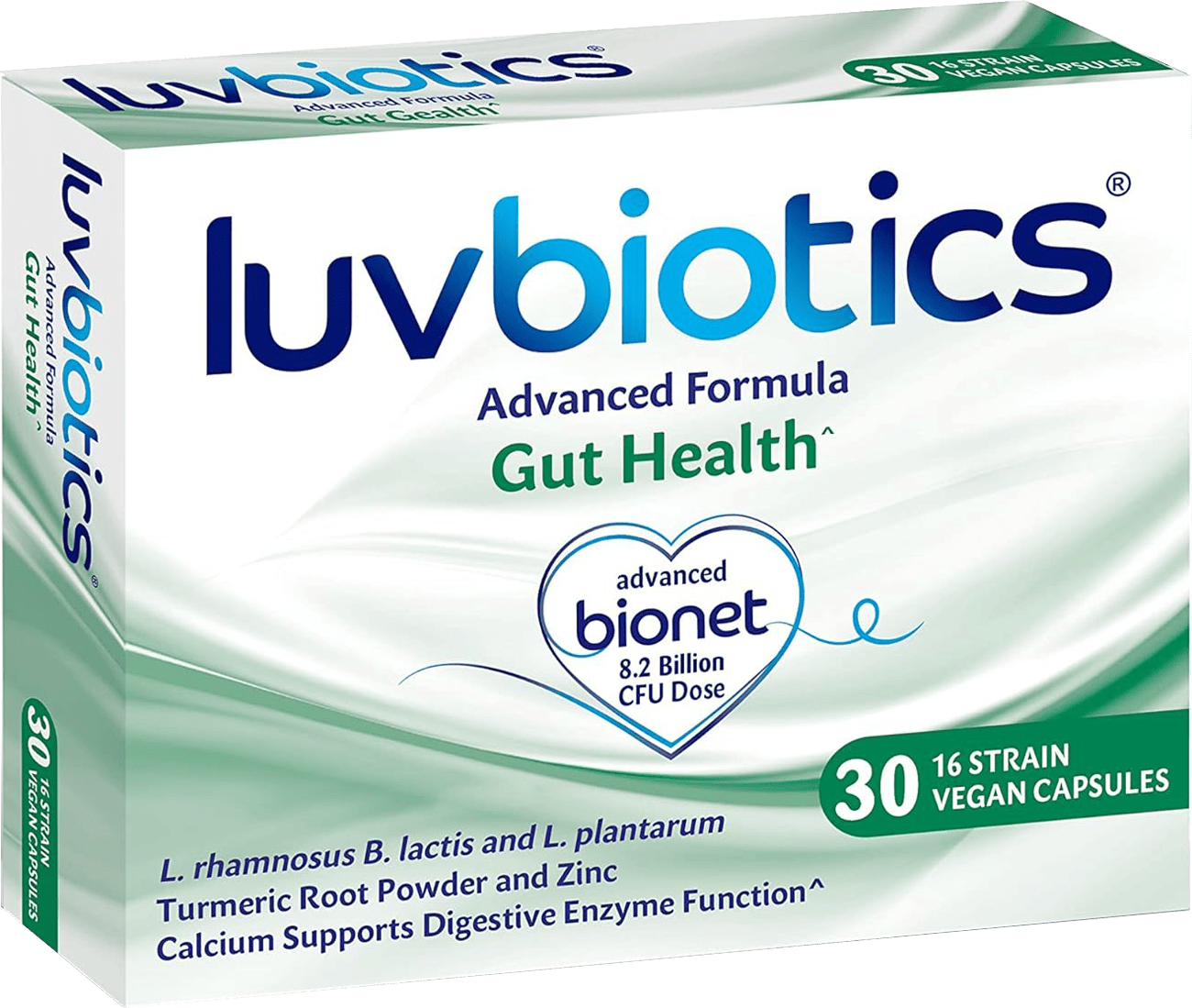
luvbiotics Advanced Formula Gut Health
Advantages
Mention of the strain specificity.
The capsules are vegan, gluten-free and free from artificial flavourings and preservatives.
Disadvantages
The dosage is too low.
The manufacturer does not have GMP certification.
At first glance, luvbiotics looks very promising thanks to their 16 bacterial strains - and thus the second highest diversity after the test winner – even with the packaging in a plastic blister. Even though an aluminium-aluminium blister promises even better protection than a plastic blister, the individual packaging still protects the contents far better than a plastic container.
However, there are also significant disadvantages: First of all, the product only contains the low dosage of 8.2 billion CFU per day - a far cry from the recommended 20 billion CFU. GMP certification is also lacking, as are substances to support the intestinal mucosa. However, the addition of zinc and calcium, which is important for the function of the digestive enzymes, should be mentioned positively here.
With 30 points, luvbiotics came in third.
Although the product contains 16 different strains, the dosage is too low.
Buy luvbiotics Advanced Formula Gut Health online
Jamieson Chewable Probiotic
Advantages
Pleasant to consume as the tablets can be chewed.
Mentions strain specificity.
Disadvantages
Contains the lowest dosage of all products tested.
Contains sugar.
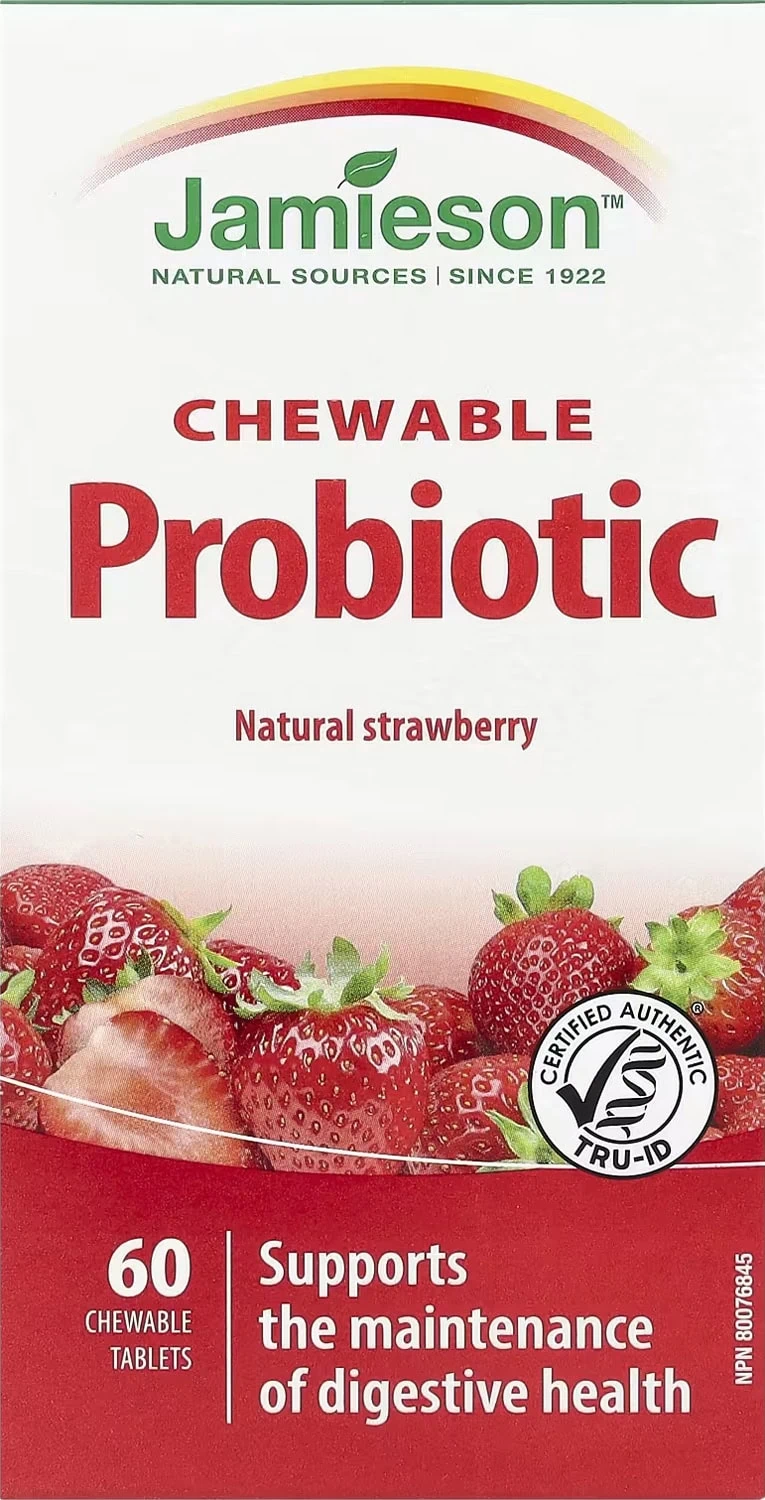
Chewable Probiotic is the only product that is not swallowed in capsule form but consumed in the form of chewable tablets. This may be an advantage for people who have difficulty swallowing capsules, but this form brings with it another problem: the flavour becomes relevant. For this reason, the manufacturer has added natural strawberry flavouring, but also sugar.
The product contains five different bacterial strains in the lowest dosage of 2 billion CFU among the products compared here. The manufacturer commendably states the strain specificity, though. The packaging in the plastic container is not ideal, as it does not adequately protect the contents from penetrating air and moisture. Ingredients that are specifically intended to support the intestinal mucosa are not included. The GMP certification can be seen as a real plus point, as it promises high production standards.
The chewable probiotics achieve a total of only 25 points and thus rank fourth.
Although they may be able to convince one or two strawberry fans thanks to their strawberry-flavoured chewable form, both the diversity and dosage are too low to achieve a real effect on the gut microbiome.
Buy Jamieson Chewable Probiotic online
Healthy Mood Natural High Strength Probiotic Max
Advantages
At 20 billion CFU, the dosage is high.
Disadvantages
One bacterial strain is not sufficient for such a preparation.
The packaging is not ideal.
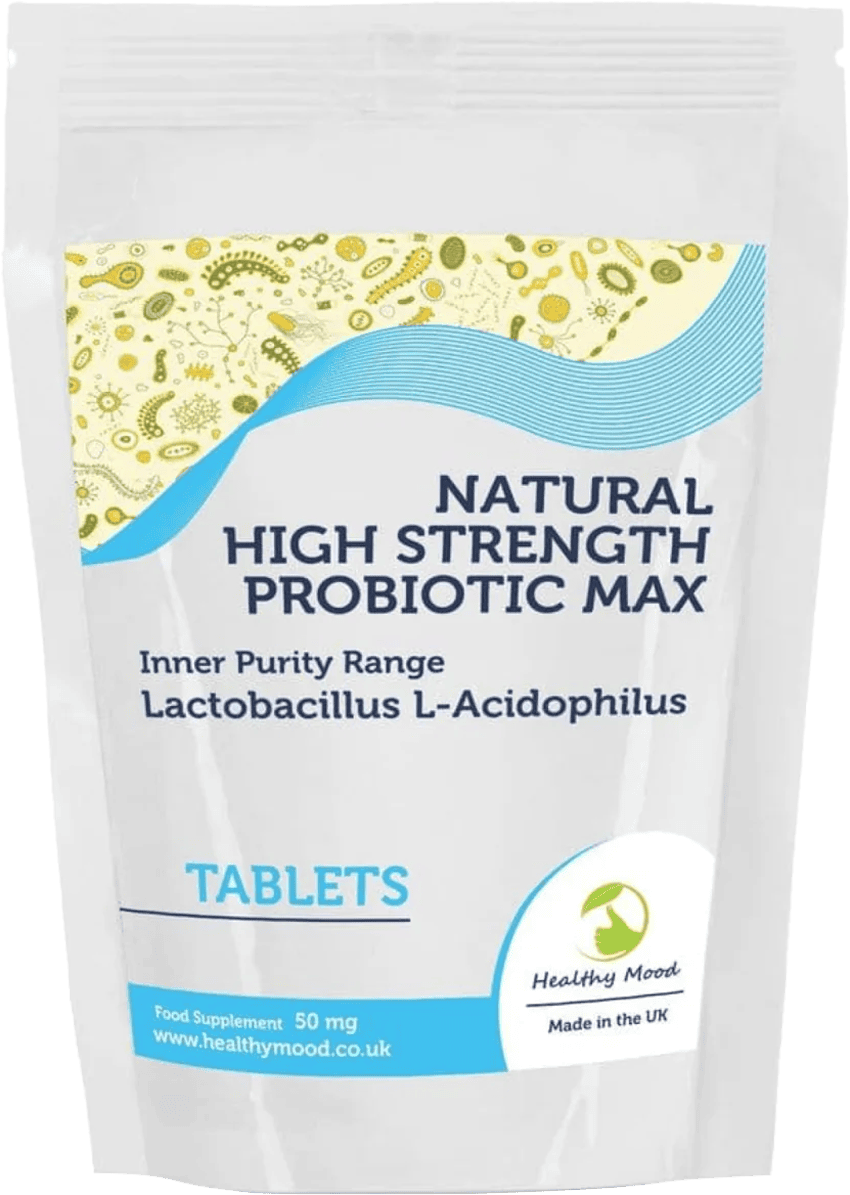
The capsules from Healthy Mood do not prove sufficient with regard to several of the key qualities a probiotic should have. The only highlight is the dosage of 20 billion CFU per capsule. On the other hand, the product contains a single bacterial strain but does not mention the strain specificity. Ingredients that are explicitly intended to support the intestinal mucosa are absent, as is GMP certification.
The product can be purchased either in a bag or in a plastic container; neither is ideal, as neither is suitable for optimally protecting the contents from penetrating air and moisture.
With a mere 20 points, the capsules from Healthy Mood came in last.
Although they scored in the higher range for dosage, they disappointed in all other areas.
Buy Healthy Mood Natural High Strength Probiotic Max online
Conclusion
Allergies have been on the rise in the Western world for several years, with more and more people having to cope with the troublesome symptoms. Recent research shows a link between a disrupted gut microbiome and the onset of allergies.
Microbiome supplements can therefore be a useful addition in many cases. However, on closer inspection, it becomes clear that there are significant differences in quality between the products available on the market. It is therefore particularly important to do thorough research before making a purchase.
1Basis of grading number of strains:
- 100 points ≥ 51 strains
- 75 points ≥ 31 strains
- 50 points ≥ 16 strains
- 25 points ≥ 6 strains
- 0 points < 6 strains
2Basis of grading of daily dosage:
- 100 points ≥ 30 billion CFU/daily intake
- 75 points ≥ 20 billion CFU/daily intake
- 50 points ≥ 10 billion CFU/daily intake
- 25 points ≥ 5 billion CFU/daily intake
- 0 points < 5 billion CFU/daily intake
Strachan, D P. Hay fever, hygiene, and household size. BMJ (Clinical research ed.) vol. 299,6710 (1989): 1259-60. doi:10.1136/bmj.299.6710.1259
Huang, Jinli et al. Effect of Probiotics on Respiratory Tract Allergic Disease and Gut Microbiota. Frontiers in Nutrition, vol. 9, 821900. 22 Feb. 2022, doi:10.3389/fnut.2022.821900
Hua, X., Goedert, J. J., Pu, A., Yu, G., & Shi, J. (2015). Allergy associations with the adult faecal microbiota: Analysis of the American Gut Project. EBioMedicine, 3, 172–179. https://doi.org/10.1016/j.ebiom.2015.11.038
Liu, Z., Xie, L., Liu, X. et al. Caesarean section and the risk of allergic rhinitis in children: a systematic review and meta-analysis. Sci Rep 13, 18361 (2023). https://doi.org/10.1038/s41598-023-44932-8
Feehley T et al, Healthy infants harbour intestinal bacteria that protect against food allergy. Nat Med (2019);25(3):448-453.
Strieker, Sonja et al. Farm living and allergic rhinitis from childhood to young adulthood: Prospective results of the GABRIEL study. The Journal of Allergy and Clinical Immunology vol. 150,5 (2022): 1209-1215.e2. doi:10.1016/j.jaci.2022.05.027
As an Amazon Associate, we earn from qualifying sales.
The information on this page does not constitute medical advice and should not be considered as such. Consult your doctor before changing your regular medical care. This product is not intended to diagnose, treat, cure or prevent any disease. The effect depends on individual factors. The images of those affected are based on real people whose names have been changed.