

Contents
Intimate odour – what, how, why?The vaginal microbiomeParticularly important bacterial strainsWhat are probiotics?Myths & factsWhat makes a good preparation?Our test The SYNformulas expert team investigates the role played by the vaginal microbiome, how a balanced intimate flora can be supported and which highly praised products are really worth the money.
Millions of women repeatedly struggle with all kinds of intimate health issues – a topic that is unpleasant in two ways: on the one hand, the sometimes very severe symptoms make life difficult for those affected, and on the other hand, it is a topic that even close friends are reluctant to discuss – but in the case of unpleasant intimate odours, it is often impossible to hide.
In most cases, the only option is to visit the doctor and then take antibiotics. This generally provides relatively quick relief from the acute symptoms. Unfortunately, however, it does not take long for a new infection to develop.
The latest research findings now point to a previously little-noticed "culprit" – and thus provide the basis for novel treatment concepts: we are talking about the so-called vaginal microbiome, often referred to as the "intimate flora".
In this article, our team investigates why scientists consider this bacterial landscape to be crucial for vaginal health, what implications and treatment options this has, and, above all, which commercially available preparations really have the potential to treat and prevent recurrent intimate infections.
Summary
Scientists worldwide agree: a balanced vaginal flora acts as an important protective shield against infections.
For this reason, probiotic preparations specifically for women are becoming increasingly popular.
However, a major product test shows: 4 out of 5 preparations disappoint.
Go to the test
Intimate odour – what, how, why?
An unpleasant, fishy vaginal odour, also known as amine odour, is an unpleasant side effect of some infections of the female genital area – primarily caused by bacterial vaginosis and some forms of vaginitis: one in five women suffers from vaginosis at least once in their lifetime. Up to 80 per cent of them even suffer from it several times.
In addition to a lack of cleanliness and freshness, the most common symptoms include a greyish-white discharge and occasional pain when urinating or during sexual intercourse. Women with bacterial vaginosis, even if they are asymptomatic, have an increased risk of contracting sexually transmitted diseases. Treatment is usually with antibiotics.

Many women are also ashamed of the symptoms, especially unpleasant odours, which, together with the pain that sometimes occurs during sexual intercourse, can also put a strain on their intimate and relationship life.

In a survey, almost three-quarters of women who struggle with recurrent bacterial vaginosis stated that it had a negative impact on their mental health.
But where should doctors start in their search for a long-term solution? A group of scientists seems to have found the answer: in the vaginal microbiome.
Vaginal microbiome – are bacteria the key to a healthy intimate area?
The vaginal microbiome – also known as the intimate flora – refers to the community of all microorganisms that colonise the vaginal mucosa: a diverse community of bacteria, fungi and other microbes that exist in a delicate balance.
The exact composition of the vaginal microbiome varies from woman to woman, but in general, lactic acid-producing bacteria dominate.
Each individual bacterial strain in this community has clearly defined tasks. Therefore, it is not only important that the microbiome is as diverse as possible, but also that certain bacterial strains are present in large numbers.
That is why a balanced vaginal flora is important:

to create a protective pH level

to inhibit the growth of harmful bacteria

to prevent fungal infections
and much more
Overall, it is helpful if the microbiome contains as many "good" bacteria as possible – also because this simply leaves no room for "bad" bacteria to settle and multiply.

The following are among the most important, so-called key strains:
Lactobacillus gasseri
As the name suggests, lactic acid bacteria produce lactic acid. This in turn creates an acidic environment that combats potentially pathogenic, i.e. harmful, germs. Bacteria of the gasseri family are particularly effective in this regard.
Lactobacillus crispatus
As the name suggests, lactic acid bacteria produce lactic acid. This in turn creates an acidic environment that combats potentially pathogenic, i.e. harmful, germs. Bacteria of the gasseri family are particularly effective in this regard.
Lactobacillus delbrueckii
As the name suggests, lactic acid bacteria produce lactic acid. This in turn creates an acidic environment that combats potentially pathogenic, i.e. harmful, germs. Bacteria of the gasseri family are particularly effective in this regard.
Lactobacillus plantarum
Studies have also shown that bacteria of the plantarum family are effective against fungal infections.
Various external factors such as infections, medication (especially antibiotics), stress and hormonal changes can upset this balance. For example, certain strains of bacteria are suppressed, allowing other strains to proliferate.
Alternatively, the overall colonisation is inhibited, resulting in too few bacteria being available to perform the tasks at hand – fighting germs.
Such an imbalance is also called dysbiosis and is currently considered by researchers to be one of the most important gateways for recurring infections and the resulting odour formation.
This clearly shows why the underlying vaginosis keeps coming back after antibiotic treatment:

Antibiotics not only combat harmful bacteria, such as Gardnerella vaginalis, the main cause of vaginosis, but also "good" bacteria, such as lactobacilli.
Without these, the vaginal microbiome is weakened and therefore unable to defend itself against new germs – a vicious circle.
For this reason, many affected women turn to so-called probiotics.
Using bacteria to fight bacteria?
Probiotics are preparations that contain specific bacteria that colonise the microbiome and are intended to restore its balance so that it can once again fully perform its tasks – in the case of the vaginal microbiome, this means defending against potentially harmful germs.

But can this really work? And if so, which preparation is best suited for this purpose?

Note: The term ‘probiotic’ is widely used, but may not be used to advertise a corresponding product.
The editorial team has instead opted for the more appropriate term ‘microculture preparation’.
Myths and facts
Myth 1: A vaginal infection that causes an unpleasant odour is a sign of poor hygiene.
Fact: Although poor intimate hygiene can in rare cases actually trigger an infection, the cause is far more often excessive or incorrect hygiene.
As already explained, lactic acid bacteria, which are usually particularly abundant in a healthy microbiome, create an acidic vaginal environment that kills potentially pathogenic germs. If the intimate area is washed too frequently and possibly with the wrong products (e.g. soap, which has an alkaline effect), the carefully constructed acid mantle is destroyed.
Myth 2: Probiotics that have to be swallowed end up in the gut and can therefore only support the gut microbiome.
Fact: Although this line of thinking may seem logical at first, science tells us otherwise.
Several studies show that when certain lactobacilli are taken orally over a period of time, these same lactobacilli can be found in larger quantities in the vaginal microbiome – and can even improve symptoms.
Myth 3: All probiotics are the same
Fact: The probiotics currently available on the market differ considerably in some respects, particularly in terms of their dosage, the number and type of bacterial strains they contain, their overall formulation and their packaging.
One thing is certain: probiotics are definitely the kind of product that you should not buy "on the spur of the moment", but only after thorough research if you do not want to be disappointed.
What makes a good preparation - our test criteria
Following in-depth research, the team of experts identified the five most important quality features and then tested five products for these features.
Quality feature 1: The composition of the bacteria
A good microculture preparation endeavours to come as close as possible to the composition of a healthy human microbiome. However, healthy microbiota are generally very diverse - a preparation should therefore contain a variety of different strains.1
In addition to a high diversity, the exact combination of strains is also important. As already mentioned, lactobacilli from the gasseri, crispatus, plantarum and delbrueckii families play a particularly important role in the vaginal microbiome.
Even if we do not take this into account when awarding points, the most accurate information possible from the manufacturer on the composition of their product creates trust. In the case of microculture preparations, this means naming the specific bacterial strains, not just their family or genus. This is important as specific strains within a family can differ enormously in their effect.
Quality characteristic 2: The dosage of colony-forming units
The number of bacteria is measured in CFU (colony-forming units). Although figures such as 2 or 4 billion CFU sound very impressive at first, a healthy vaginal microbiome contains around 50 billion CFU. Preparations with a dosage that is too low are therefore not significant enough to actually bring about a change.2
Quality characteristic 3: Support for the vaginal mucosa
In order for the microcultures to colonise the vaginal area and do their work there, they need a suitable breeding ground: an intact vaginal mucosa. The problem is that this is often already damaged, especially after recurrent infections, which makes it difficult for the good bacteria to colonise.
In addition to bacteria, microculture preparations should therefore also contain substances that support the vaginal mucosa, such as vitamins B3, B7 and B2. In order to provide the broadest possible support, the product should contain at least two ingredients that have a proven positive effect on the mucous membrane. Products that fulfil this requirement receive 100 points, products with only one such ingredient receive 50 points; if they do not contain a single ingredient of this type, they receive 0 points.
Quality characteristic 4: The stability of the packaging
The bacteria in a microculture preparation are put into a kind of hibernation during production by freeze-drying. When they come into contact with moisture, they "wake up". If suitable food sources are then available - which is the case during passage through the intestine - the bacteria thrive.
The problem is that many forms of packaging do not adequately protect the products from moisture. For example, if capsules are not packed individually but all together, the products come into contact with air or moisture every time they are opened.
The result: the bacteria can awaken too early, but then find no food in the capsule - and starve to death.
In the case of plastic packaging, an additional complication is that the material does not completely keep out moisture: Tiny amounts of moisture can pass through the packaging.
The packaging gold standard is the so-called aluminium-aluminium blister, in which each capsule is individually embedded in an aluminium chamber and is therefore optimally protected.
Products with this kind of packaging will therefore receive full marks. In contrast, plastic blisters, while still offering single-unit packaging, are made from inferior materials. As a result, products with plastic packaging will only receive 75 points.
While the properties of glass are superior to those of plastic, glass bottles usually contain a greater number of capsules which leads to them being in contact with air and therefore moisture with every opening. Glass bottles therefore are only "worth" 50 points, same as plastic bottles which offer some kind of additional protection. Simple plastic bottles on the other hand combine the disadvantages of glass bottles and plastic blisters and can therefore only be awarded 25 points.

Aluminium-aluminium blister packs protect bacteria in their capsules optimally against moisture.
Quality characteristic 5: Quality standards and certification
Unfortunately, there are hardly any legal requirements for the production of microculture preparations. For this reason, many manufacturers advertise with certifications - but these often only cover a minimum standard. It is therefore particularly important to take a closer look at the certifications advertised. The highest standard is ensured by production in accordance with GMP (Good Manufacturing Practice), the pharmaceutical production standard.
Only GMP-certified manufacturers can assure consumers that the microculture preparations have been manufactured to this particularly high standard. For this reason, 100 points are awarded for a certificate that is available, but 0 points if it is missing.

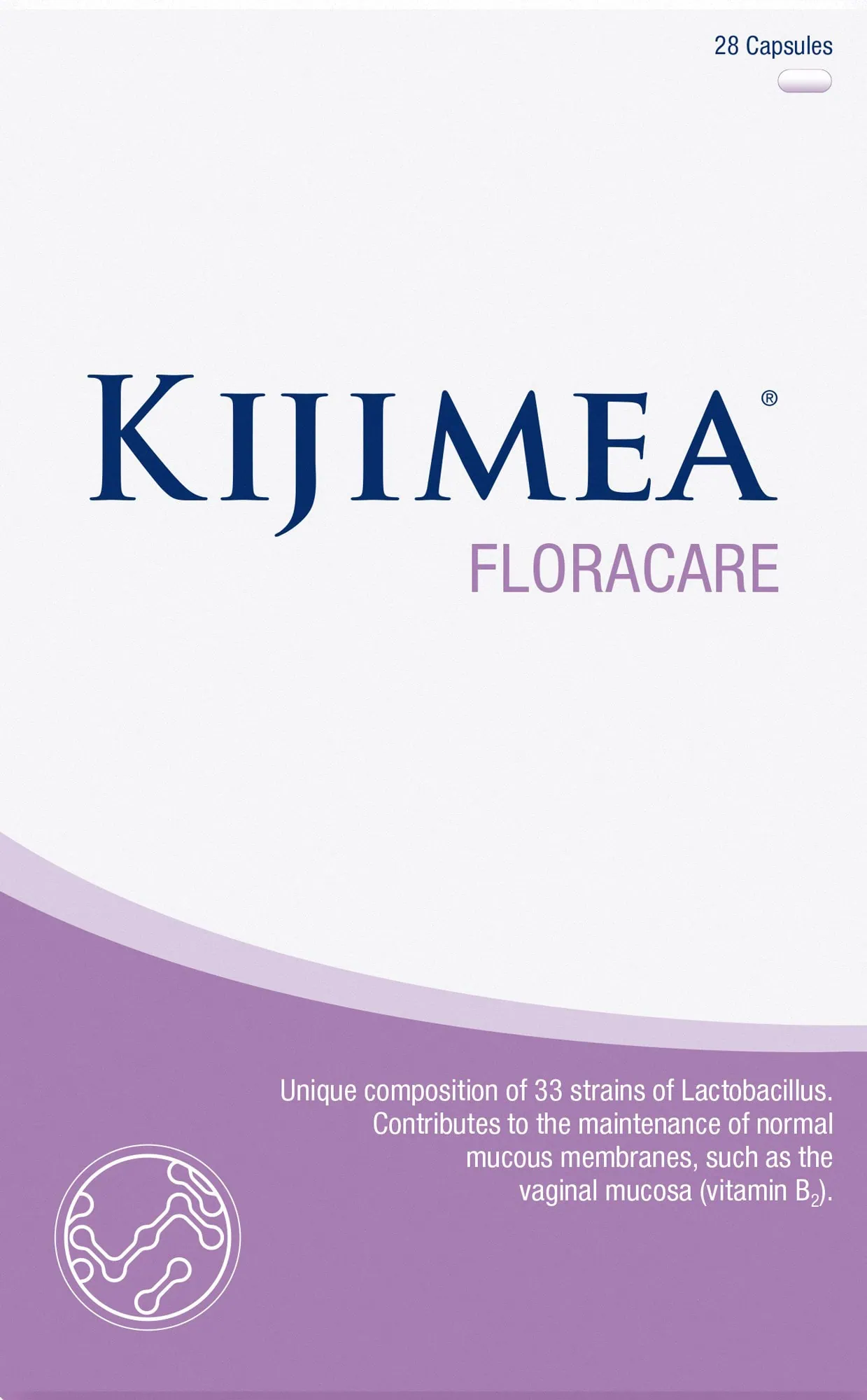
Kijimea FloraCare
Advantages

The manufacturer is known in medical circles for its research and innovations.
The product is gluten-, fructose- and lactose-free, free from preservatives and flavourings and free from sweeteners.
The carefully selected bacterial strains in their combination support the natural pH value of the vaginal environment.
Disadvantages

The manufacturer recommends using the product over a longer stretch of time.
Our winning product Kijimea FloraCare comes from SYNformulas. Thanks to its own scientific research, which has even been published in the world-renowned specialist journal "The Lancet", this company enjoys a great reputation in medical circles.
This is also proven by this product: Kijimea FloraCare contains by far the most bacterial strains, including the important Lactobacillus genera gasseri, crispatus, plantarum and delbrueckii. Another plus: the manufacturer is extremely transparent here and states the strain specificity for all 33 bacterial strains.
The dosage is pleasingly high at 10 billion CFU per capsule. Three different vitamins, B3 (niacin), B7 (biotin) and B2 (riboflavin), are intended to support the vaginal mucosa in order to promote the colonisation of good bacteria. The test winner also impresses with its packaging in an aluminium-aluminium blister: it optimally protects each individual capsule from moisture. Certification in accordance with the particularly strict GMP standard creates further confidence.
What particularly caught our eye during our research on this product are the numerous extremely positive customer reviews that underline our own impression of the product. Here are some examples:

Claire A.

'A very good product. I feel much better after the first pack. I'm very satisfied.'
Hannah L.
'I am more than satisfied with the product and after only 14 days of taking it, I feel that the tablets are working and my symptoms have improved. I have taken similar products before and actually didn't notice any effect, so I can give the Kijimea product an absolute buy recommendation.'
Vanessa H.
'Excellent product! Easy to take thanks to the small capsules. Contains a large number of different bacterial strains. Significantly more than in other probiotic products for vaginal flora. Some of which were also more expensive. I hope I achieve the desired success in bringing my unbalanced flora back into balance.'
Kijimea FloraCare was convincing across the board and therefore deservedly took first place with 95 points.
Particularly impressive: the product contains 33 different bacterial strains and three additional ingredients to support the vaginal mucosa.
Signify Nature BioActrin

Advantages
Manufacturer indicates strain specificity.
Vegetarian and gluten-free.
Disadvantages
Very low diversity.
The product at least contains biotin to support the vaginal mucosa, but a second ingredient of this kind would have been welcome.
BioActrin from Signify Nature comes in second place. Users consume 20 billion CFU per daily dose, spread over two capsules. The product therefore achieves the full score of 100 points in this category. Diversity is a different story: Two different bacterial strains can be found on the list of ingredients. Even if it is positive that their specificity is stated, we cannot award any points for this small number.
Fortunately, the capsules with biotin contain at least one ingredient that is intended to specifically address a damaged vaginal mucosa (50 points). On a positive note, it should be emphasised that BioActrin has GMP certification. Consumers can therefore rely on high production standards.
The capsules from BioActrin landed in second place with a total of 55 out of 100 points, far behind the test winner. The GMP certification and dosage are particularly positive, but the low diversity is a pity.
Buy Signify Nature BioActrin online
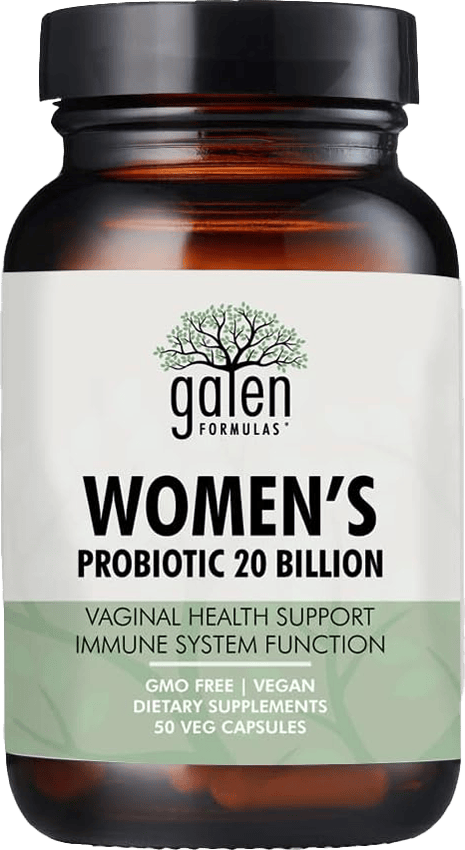
Galen Formulas Women's Probiotic 20 Billion
Advantages
The product is vegan and GMO-free.
Very high dosage.
Disadvantages
The packaging is unsuitable for the contents.
Very low diversity.
The great advantage of the capsules from Galen Formulas is the very high dosage of 20 billion CFU per capsule as already mentioned in the name. Women's Probiotic 20 Billion therefore scores full marks in this category.
However, these are only distributed across three different bacterial strains, so we cannot award any points for diversity. The product also comes away empty-handed in terms of supporting the vaginal mucosa, as it does not contain any such ingredients.
The capsules are in a glass bottle, which is preferable to simple plastic, but still does not provide ideal protection for the contents. Accordingly, the product receives 25 points in this category. We were unable to find any reference to GMP certification during our research.
Women's Probiotic 20 Billion came in 3rd place with 30 points, but a long way off the top two places. The biggest plus point of the product is the high dosage, but unfortunately it did not score well in the other categories.
Buy Galen Formulas Women's Probiotic 20 Billion online
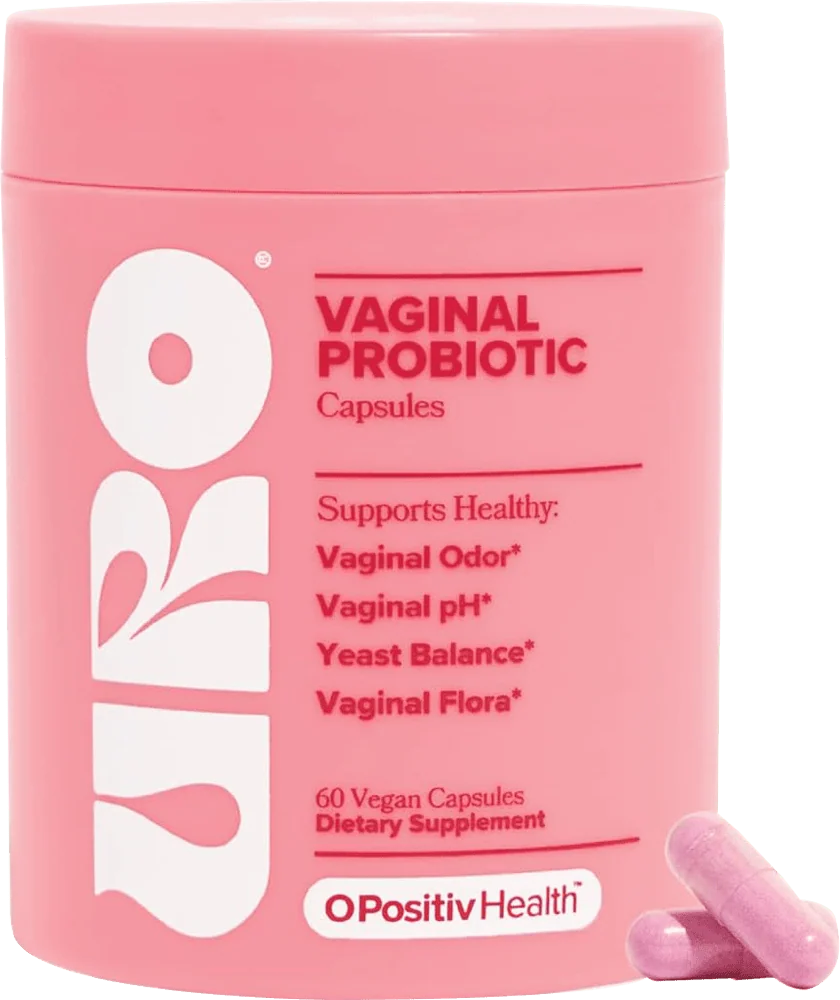
URO Vaginal Probiotic
Advantages
Pretty, modern packaging.
Contains XOS, a prebiotic that acts as food for "good" intestinal bacteria.
Disadvantages
No additional ingredients to support the vaginal mucosa.
Diversity too low.
As with the second and third places, the fourth-placed URO Vaginal Probiotic also lacks the diversity of just four different bacterial strains, the strain specificity of which remains unknown. The product also fails to score points for supporting the vaginal mucosa, as it does not contain a single ingredient to support it. URO Vaginal Probiotic therefore scores 0 points in both categories.
The dosage looks a little better. With 5 billion CFU (divided into two capsules), the product is at the back of the field, but at least scores 25 points. The packaging is a simple plastic container - how many of the 2.5 billion CFU per capsule are still viable at the time of consumption therefore remains unclear. The product accordingly also only receives 25 points in this category.
With just 10 points, the capsules from URO only just managed to come second last. Even though the capsules are nicely coloured pink and the plastic box looks quite aesthetically pleasing, the contents are not convincing.
Buy URO Vaginal Probiotic online
Hatman Labs Vaginal Health Gummies

Advantages
Presentation as gummies with pineapple flavour.
Addition of vitamin C.
Disadvantages
Lowest dosage in the test.
The product contains only a single strain of bacteria.
The Vaginal Health Gummies from Hatman Labs were not convincing in any category in our test and therefore received 0 points everywhere. They only contain a single bacterial strain whose strain specificity is at least mentioned. Nevertheless, we can only award 0 points for this.
The situation is similar with regard to the dosage: with a daily dose of two gummies, users only consume 1 billion CFU according to the nutritional table. In addition, the dosage causes confusion among our experts, as the manufacturer advertises 150 billion CFU. How this is possible with a pack size of 60 gummies containing 0.5 billion CFU was not clear to the team of experts.
Users will search in vain for ingredients to support the vaginal mucosa as well as references to GMP certification. Only the addition of vitamin C and pineapple powder, which is described by the manufacturer as "loaded with essential vitamins, dietary fibre, and minerals", should be emphasised positively. The gummy dosage form offers an advantage to women who have difficulty swallowing capsules. However, this makes the flavour aspect relevant - and tastes are known to differ.
All in all, the Vaginal Health Gummies are not convincing in any category and finish the test with 0 out of 100 points. The very low dosage and diversity are particularly negative.
Buy Hatman Labs Vaginal Health Gummies online
Conclusion
Even though unpleasant odours, especially in the intimate area, are a taboo subject in our society, it is clear that a surprisingly high number of women are regularly affected by them.
In addition to the physical consequences, many women also report significant psychological stress associated with these often recurring symptoms. Existing treatments may provide acute relief, but in many cases the infection quickly returns. New approaches are therefore urgently needed.
The microbiome approach is particularly promising, as it has been proven that it can be positively influenced with suitable microculture preparations. However, as our test shows, the differences in quality between the preparations currently available are sometimes enormous.
It is therefore essential to conduct thorough research before making a purchase decision.
1Basis of grading number of strains:
- 100 points ≥ 51 strains
- 75 points ≥ 31 strains
- 50 points ≥ 16 strains
- 25 points ≥ 6 strains
- 0 points < 6 strains
2Basis of grading of daily dosage:
- 100 points ≥ 30 billion CFU/daily intake
- 75 points ≥ 20 billion CFU/daily intake
- 50 points ≥ 10 billion CFU/daily intake
- 25 points ≥ 5 billion CFU/daily intake
- 0 points < 5 billion CFU/daily intake
Bi Z et al. “Effect of Lactobacillus delbrueckii subsp. lactis on vaginal radiotherapy for gynaecological cancer.” Scientific reports vol. 13,1 10105. 21 Jun. 2023, doi:10.1038/s41598-023-37241-7
Chow K et al. “Impact of (recurrent) bacterial vaginosis on quality of life and the need for accessible alternative treatments.” BMC women's health vol. 23,1 112. 18 Mar. 2023, doi:10.1186/s12905-023-02236-z
Khedkar R, Pajai, S. “Bacterial Vaginosis: A Comprehensive Narrative on the Etiology, Clinical Features, and Management Approach.” Cureus vol. 14,11 e31314. 10 Nov. 2022, doi:10.7759/cureus.31314
Montella R, Malfa P et al. Vaginal adhesion of Lactobacillus plantarum P17630 after probiotic food supplement oral administration: a preliminary in vivo study. Nutrafoods 12, 35–42 (2013). https://doi.org/10.1007/s13749-013-0030-x
As an Amazon Associate, we earn from qualifying sales.
The information on this page does not constitute medical advice and should not be considered as such. Consult your doctor before changing your regular medical care. This product is not intended to diagnose, treat, cure or prevent any disease. The effect depends on individual factors. The images of those affected are based on real people whose names have been changed.