
Constant itching or burning in the genital area, discharge and sometimes an unpleasant odour: an infection with harmful bacteria or fungi in the vaginal area is painful and very unpleasant for affected women, especially if it recurs regularly. In addition, many sufferers find it difficult to talk openly about these problems, which is why they often put off going to the doctor.
However, in order to be able to treat the symptoms in an acute case, it is crucial to determine the pathogen, as it can either be a fungal infection (vaginal candidiasis), an infection of the vagina with the bacterium Gardnerella vaginalis and related bacteria (vaginosis) or an infection with bacteria such as Escherichia coli or B streptococci (aerobic vaginitis).
Beyond the acute treatment of the pathogens, however, doctors have long been helpless: millions of women in the UK have had to accept the fact that their symptoms, whether caused by bacteria or fungal infections, keep recurring and need to be treated. Relapse rates of up to 75 percent are the sad reality.
However, German researchers have now made a groundbreaking discovery that could have a lasting impact on the lives of those affected: They have succeeded in identifying the true cause of the fact that harmful bacteria and fungi can colonise again and again. Based on this, they have now come up with a completely new approach that could give millions of affected women new hope. In this article, we take a closer look at it, explain what you need to bear in mind and what this revolutionary idea could mean for you.
Firstly: candidiasis, vaginosis and vaginitis - what are these symptoms and what triggers them?
Recurrent itching or burning in the genital area, discharge and sometimes unpleasant odours are often due to one of the following three diseases, which are caused by different pathogens and are very common in the UK:
Candidiasis
Candidiasis is a fungal infection in the vaginal area. It is usually caused by yeast fungi of the genus Candida, most commonly Candida albicans (80-90% of cases). The fungi colonise the vaginal epithelial cells and cause symptoms such as a yellow-white change in the vaginal fluid as well as itching and reddening of the vagina. The disease is treated with antimycotics, i.e. antifungal agents.
Around 3 in 4 women will develop the disease at least once in their lifetime. However, 8-10 percent, i.e. around 2.5 million women in the UK, suffer from recurrent candidiasis, i.e. a recurring disease with at least four flare-ups a year - a massive impairment of quality of life.
Bacterial vaginosis
Bacterial vaginosis is the colonisation of the vaginal epithelial cells with harmful bacteria - in 95% of cases it is Gardnerella vaginalis. Patients typically complain of grey-white homogeneous discharge (fluorine), which may be increasingly foamy or thin.
Fluorine has an unpleasant, usually fishy odour, which is caused by the amines (derivatives of ammonia) formed. Itching and skin irritation can occur in the external vaginal area. Pain is also occasionally experienced during sexual intercourse or urination.
Up to one in four women are affected. What is particularly alarming is that in 60-70% of cases, there are further relapses after the first occurrence. Bacterial vaginosis is treated with antibiotics.
Aerobic vaginitis
Aerobic vaginitis is a bacterial inflammation of the vagina. However, unlike vaginosis, it is caused by aerobic bacteria, i.e. bacteria that require oxygen to live (such as Escherichia coli or B streptococci). Aerobic vaginitis is characterised by burning pain, blotchy reddening of the vaginal skin (erythema) and yellow-green thin discharge.
The disease mainly occurs after the menopause; and here too, the relapse rate is alarmingly high at almost 75%. As with vaginosis, antibiotics are used for acute treatment.
Why do candidiasis, vaginosis or aerobic vaginitis occur again and again in so many women?
But why are millions of women repeatedly affected by these symptoms, while others never suffer from them? In order to understand this, it is first necessary to shed light on how the body can actually protect itself against the possible triggers of candidiasis, vaginosis and vaginitis. This is where the latest research results come into play, which have identified the same body's own defence mechanism against all three diseases.
The secret lies in the vaginal microbiome, i.e. the natural community of beneficial bacteria found in a healthy vagina. What many people don't realise: Even though the term microbiome is often associated with the bacterial landscape in the gut, there are also beneficial bacteria in many other places in our body that play a crucial role in our well-being. Examples include the skin, mucous membranes and the intimate area.
Like the gut microbiome, the healthy vaginal microbiome consists of different strains of bacteria that colonise the vaginal epithelial cells (i.e. the skin). These bacteria have been the subject of intensive research in recent years.
Using state-of-the-art methods such as 16S rRNA-based gene sequencing, researchers analysed the vaginal microbiomes of thousands of women. They discovered that each vaginal microbiome is as unique as a fingerprint. While some bacterial species are found in the vaginal microbiome of the vast majority of women, others are found in less than one percent of the samples examined!
When various research groups worldwide finally investigated the connection between the vaginal microbiome and complaints such as candidiasis, vaginosis or aerobic vaginitis, they came to groundbreaking results: While the vaginal microbiome of healthy women usually consists predominantly of lactobacilli (i.e. lactic acid bacteria), particularly of the genera Lactobacillus crispatus, Lactobacillus gasseri or Lactobacillus jensenii, the microbiome of women suffering from candidiasis, vaginosis or anaerobic vaginitis often has a completely different composition.
A research group led by David N. Fredericks from the University of Washington/Seattle (USA) found that over 83% of the microbiome of women who do not suffer from vaginosis is dominated by lactobacilli. In contrast, these were largely replaced by Gardnerella vaginalis in women affected by vaginosis and are therefore in the minority. The same applies to aerobic vaginitis, except that aerobic bacteria such as streptococci displace the lactobacilli.
However, the vaginal microbiome is also significantly altered in vaginal candidiasis: A research team led by Emily McKloud and Christopher Delaney from the University of Glasgow was able to prove that the proportion of the crucial lactobacilli in patients with vaginal candidiasis is almost 40% lower than in the comparison group!
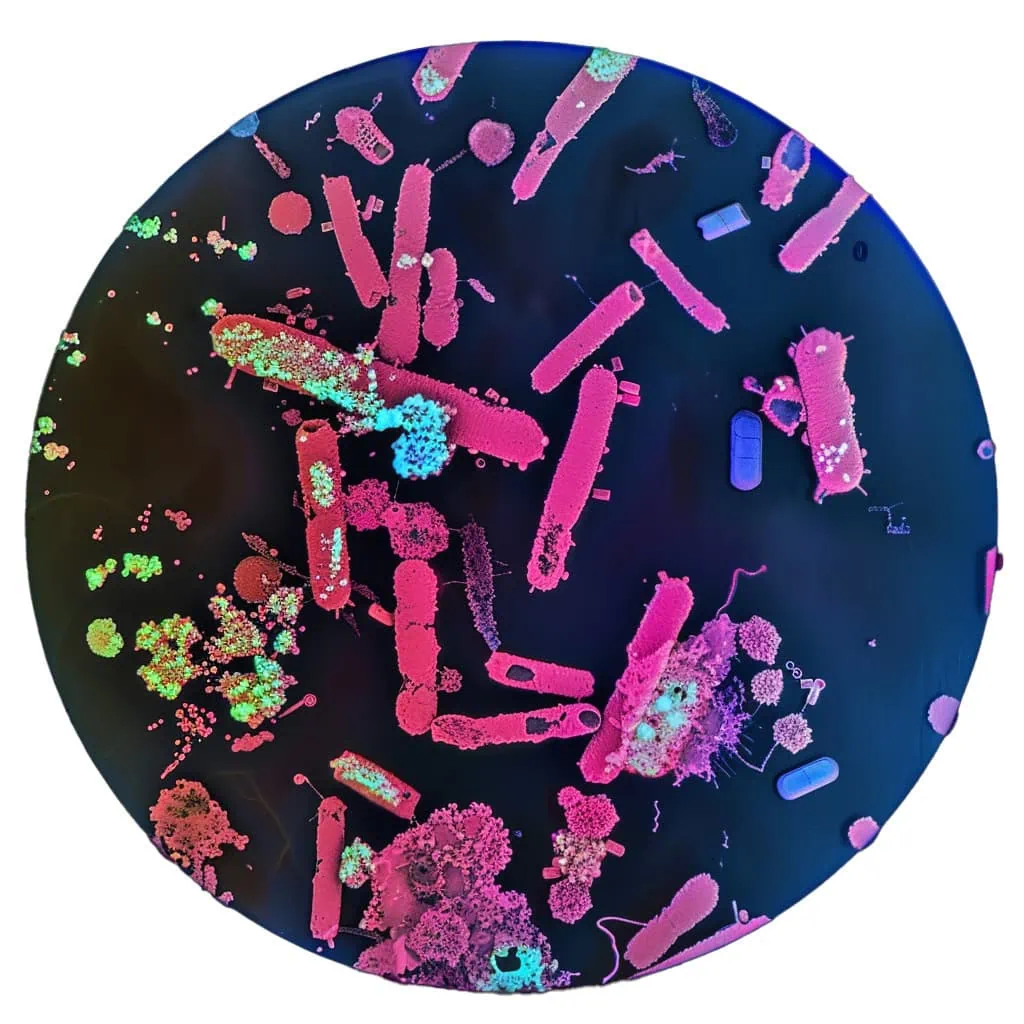
Science was electrified: The vaginal microbiome apparently plays a crucial role in preventing a wide range of vaginal complaints, from vaginosis and aerobic vaginitis to candidiasis. However, in order to develop effective new approaches, it was first necessary to understand how exactly the beneficial lactobacilli counteract the invasion of harmful bacteria such as Gardnerella vaginalis, streptococci or fungi (e.g. Candida albicans).
Researchers on all continents have eagerly set to work to shed more light on this connection. In recent years, this has resulted in a large number of studies that prove that various specific lactobacilli strains suppress harmful bacteria and fungi through several mechanisms.
How does a healthy vaginal microbiome prevent the development of vaginosis, aerobic vaginitis and candidiasis?
A team led by Marnie L. Peterson from the University of Minnesota (USA) has reached an important milestone in research into how the vaginal microbiome can prevent the development of bacterial-induced complaints such as vaginosis or vaginitis.
Their idea: The vaginal flora of healthy women is characterised by an acidic environment, as the lactobacilli that predominate there produce a lot of lactic acid as part of their glycogen metabolism (pH value of 3.8-4.5). However, many harmful bacteria cannot survive in such an environment. They surmised that this would also apply to the pathogen that causes vaginosis, Gardnerella vaginalis.
To put their hypothesis to the test, the researchers exposed Gardnerella vaginalis to two different environments: One acidic and one with a neutral pH of 5.5. The result of their experiments: The pathogen was unable to grow in an acidic environment, such as that produced by lactobacilli, but was able to grow in an environment with a neutral pH value. They were thus able to show that the acidic environment created by the lactobacilli in the healthy vagina is crucial for the prevention of vaginosis.
Incidentally, a team from Washington University in St. Louis (USA) was able to show the same for the harmful fungus Candida albicans, the most common pathogen of candidiasis: even though an acidic environment, such as that produced by lactobacilli, does not kill the fungus, it was able to significantly curb the growth of the harmful fungus Candida albicans.
In addition, as Italian researcher Irene Vacca was able to show, the fungus has to change in an acidic environment (chitin and β-glucan are more exposed). This in turn helps the immune system to recognise and fight the invader.
Another mechanism by which lactobacilli strains counteract bacterial infections such as vaginosis has been discovered, thanks in part to the work of Caroline Mitchell's research group in Boston (USA).

A balanced, healthy vaginal microbiome is one of the most important defences against various infectious diseases.

Mitchell and her team were able to show that the beneficial bacteria produce hydrogen peroxide, which also inhibits or even stops the growth of many pathogenic bacteria such as Gardnerella vaginiensis. Other researchers had previously discovered this with regard to bacteria that cause aerobic vaginitis.
The reason for hydrogen peroxide production lies in the type of beneficial bacteria: Because lactobacilli are so-called anaerobic bacteria, i.e. they do not need oxygen to live; on the contrary, it can even be harmful to them. The unique process of many lactobacilli strains: they "detoxify" oxygen via enzymes and use it to produce hydrogen peroxide (chemically H2O2).
As hydrogen peroxide inhibits the growth of harmful bacteria, the lactobacilli use this completely natural process to create a further mechanism that protects against vaginosis and vaginitis. Incidentally, the production of hydrogen peroxide is particularly pronounced in strains of the Lactobacillus crispatus family, as a separate study by Pirje Hütt and Eleni Lapp from the University of Tartu (Estonia) was able to show.
The bacteria that produce hydrogen peroxide are also useful for the treatment of candidiasis. After colonising the vagina, the harmful fungus Candida albicans produces a biofilm that protects it from threats. As Yijun Li and Jingyun Du from Fujian University in China have shown, hydrogen peroxide damages this protective shield of the invader so that both treatments and the body's own defences can better attack it and thus combat candidiasis.
A third aspect of why intact vaginal flora, which consists primarily of beneficial lactic acid bacteria, can protect against vaginosis and aerobic vaginitis as well as candidiasis has been demonstrated by international researchers, including German specialists from Leibnitz-HKI Jena and the University of Cologne:
Lactobacilli have a strong adhesive force, i.e. they adhere very strongly to the vaginal epithelial cells. They therefore form a dense bacterial turf that is almost impenetrable to harmful germs if they dominate the vaginal microbiome to a sufficient extent. The number of lactobacilli can reach up to 10 billion bacteria per millilitre of vaginal secretion. In this way, they take away the habitat of harmful bacteria such as Gardnerella vaginalis or B streptococci, but also fungi such as Candida albicans, so that they cannot colonise.
Why antibiotic therapy helps with vaginosis and vaginitis in the short term, but can favour the development of recurring diseases in the long term
As vaginosis and aerobic vaginitis are often very unpleasant and painful, doctors are often forced to prescribe antibiotics. These are also very effective in the short term, because despite increasing resistance, they usually succeed in killing the trigger, i.e. the harmful bacteria.
The problem with this is that antibiotics not only kill harmful bacteria such as Gardinerella vaginalis or B streptococci, but also the good bacteria such as lactobacilli in the vaginal flora. The result: a clear-cutting of the bacterial landscape, which significantly weakens the resistance of the vaginal microbiome to newly invading bacteria or fungi and makes it easier for them to colonise and cause a new infection.
It is therefore no wonder that, as mentioned at the beginning, we are dealing with a high proportion of recurrent diseases. As the most important therapeutic approach, antibiotics, can actually increase the risk of recurrence in the case of a bacterial infection, many researchers have asked themselves how the knowledge gained in recent years on the importance of the microbiome in vaginosis or aerobic vaginitis, but also in candidiasis, can be utilised.
A revolutionary approach: holistic promotion of the vaginal microbiome
On this basis, a research team from the German company SYNformulas aimed to find a long-term solution for the aforementioned recurring infections. Three important hypotheses for a corresponding preparation have emerged:
Targeted promotion of the diversity of the vaginal microbiome with the most effective lactobacillus strains
Each strain of lactobacilli has different characteristics. As mentioned above, strains of the crispatus family are particularly efficient at producing beneficial hydrogen peroxide, while other strains (e.g. the gasseri family) are particularly good at creating the acidic environment that a healthy vagina needs to fight harmful bacteria or fungi.
The researchers also found that other strains such as the Lactobacillus plantarum and delbruecki families, which are not so strongly represented in the vaginal microbiome, were also able to prove their effectiveness in vaginal infections and in combating bacteria and fungi. The researchers' aim was to unite the best strains of the respective families in order to combine the particular strengths of the individual strains in their diversity into a unique whole.
An exceptionally high number of lactobacillus strains to remove the breeding ground for harmful germs
Harmful bacteria and fungi need space to colonise. Lactobacilli can specifically counteract this by occupying the space on the epithelial cells like a lawn, so to speak. To achieve this, the beneficial bacteria must be present in high concentrations. In a healthy vaginal microbiome, vaginal secretions contain around 50 billion bacteria per day - care must be taken to ensure that a product supplies a significant proportion of these.
Strengthening the vaginal mucosa
The vaginal mucosa serves as a habitat for the beneficial lactobacilli and is of great importance for good vaginal flora. Conversely, harmful germs can settle more easily in a damaged vaginal mucosa. The researchers therefore also wanted to add micronutrients that specifically strengthen the structure and function of the vaginal mucosa and thus promote the colonisation of beneficial bacteria.
Atassi F, Brassart D et al. Lactobacillus strains isolated from the vaginal microbiota of healthy women inhibit Prevotella bivia and Gardnerella vaginalis in coculture and cell culture, FEMS Immunology & Medical Microbiology, Volume 48, Issue 3, December 2006, Pages 424–432, https://doi.org/10.1111/j.1574-695X.2006.00162.x
Berufsverband der Frauenärzt. Bakterielle Vaginose. Bakterielle Vaginose » (frauenaerzte-im-netz.de) zuletzt abgerufen: 22.04.2024
Betchard C. Rezidivierende Infektionen im Bereich von Scheide und Vulva. Pilze, Herpes genitalis, bakterielle Vaginose. Gynakologie 1/2019. schwerpunkt/update (rosenfluh.ch) zuletzt abgerufen 22.04.2024
Breshears LM, Edwards VL et al. Lactobacillus crispatus inhibits growth of Gardnerella vaginalis and Neisseria gonorrhoeae on a porcine vaginal mucosa model. BMC Microbiol 15, 276 (2015). https://doi.org/10.1186/s12866-015-0608-0
Chee W et al. “Vaginal microbiota and the potential of Lactobacillus derivatives in maintaining vaginal health.” Microbial cell factories vol. 19,1 203. 7 Nov. 2020, doi:10.1186/s12934-020-01464-4
Choi S et al. “Lactobacilli Strain Mixture Alleviates Bacterial Vaginosis through Antibacterial and Antagonistic Activity in Gardnerella vaginalis-Infected C57BL/6 Mice.” Microorganisms vol. 10,2 471. 20 Feb. 2022, doi:10.3390/microorganisms10020471
Fredricks DN, Fiedler TL, Marrazzo JM. Molecular identification of bacteria associated with bacterial vaginosis. N Engl J Med. 2005 Nov 3;353(18):1899-911. doi: 10.1056/NEJMoa043802. PMID: 16267321.
Healthcare in Europe. Darmzellen und Milchsäurebakterien schützen vor Candida-Infektionen. Darmzellen und Milchsäurebakterien schützen vor Candida-Infektionen • healthcare-in-europe.com zuletzt abgerufen: 22.04.20224
Holm JB, France MT et al. Integrating compositional and functional content to describe vaginal microbiomes in health and disease. Microbiome 11, 259 (2023). https://doi.org/10.1186/s40168-023-01692-x
Jefferson K. The Bacterial Etiology of Preterm Birth. Advances in Applied Mircorbiology. 2012. 80:1-22. DOI:10.1016/B978-0-12-394381-1.00001-5
Jang S, Lee, K et al. Vaginal lactobacilli inhibit growth and hyphae formation of Candida albicans. Sci Rep 9, 8121 (2019). https://doi.org/10.1038/s41598-019-44579-4
Kaambo E et al. “Vaginal Microbiomes Associated With Aerobic Vaginitis and Bacterial Vaginosis.” Frontiers in public health vol. 6 78. 26 Mar. 2018, doi:10.3389/fpubh.2018.00078
Kalusche S, Vanshylla K et al. Lactobacilli Expressing Broadly Neutralizing Nanobodies against HIV-1 as Potential Vectors for HIV-1 Prophylaxis? Vaccines (Basel). 2020 Dec 13;8(4):758. doi: 10.3390/vaccines8040758. PMID: 33322227; PMCID: PMC7768517.
Kim M J et al. “Clinical Significance of Composition and Functional Diversity of the Vaginal Microbiome in Recurrent Vaginitis.” Frontiers in microbiology vol. 13 851670. 18 Feb. 2022, doi:10.3389/fmicb.2022.851670
Li T, Liu Z, et al. Local Probiotic Lactobacillus crispatus and Lactobacillus delbrueckii Exhibit Strong Antifungal Effects Against Vulvovaginal Candidiasis in a Rat Model. Front Microbiol. 2019 May 8;10:1033. doi: 10.3389/fmicb.2019.01033. PMID: 31139166; PMCID: PMC6519388.
Li Y, Du J et al.. Hydrogen peroxide potentiates antimicrobial photodynamic therapy in eliminating Candida albicans and Streptococcus mutans dual-species biofilm from denture base. Photodiagnosis Photodynamic Therapy. 2022 Mar ;37:102691. doi: 10.1016/j.pdpdt.2021.102691. Epub 2021 Dec 16. PMID: 34921987.
Liu P et al. “Use of probiotic lactobacilli in the treatment of vaginal infections: In vitro and in vivo investigations.” Frontiers in cellular and infection microbiology vol. 13 1153894. 3 Apr. 2023, doi:10.3389/fcimb.2023.1153894
Malinovská Z, Čonková E, Váczi P. Biofilm Formation in Medically Important Candida Species. Journal of Fungi. 2023; 9(10):955. https://doi.org/10.3390/jof9100955
McKloud E, Delaney C et al. 2021.Recurrent Vulvovaginal Candidiasis: a Dynamic Interkingdom Biofilm Disease of Candida and Lactobacillus. mSystems6:10.1128/msystems.00622-21.https://doi.org/10.1128/msystems.00622-21
Miko E, Barakonyi A. The Role of Hydrogen-Peroxide (H2O2) Produced by Vaginal Microbiota in Female Reproductive Health. Antioxidants. 2023; 12(5):1055. https://doi.org/10.3390/antiox12051055
Mitchell C, Fredricks, D et al. Hydrogen Peroxide–Producing Lactobacilli Are Associated With Lower Levels of Vaginal Interleukin-1β, Independent of Bacterial Vaginosis. Sexually Transmitted Diseases 42(7):p 358-363, July 2015. | DOI: 10.1097/OLQ.0000000000000298
Mohankumar B, Shandil RK et al. Vaginosis: Advances in new therapeutic development and microbiome restoration. Microb Pathog. 2022 Jul;168:105606. doi: 10.1016/j.micpath.2022.105606. Epub 2022 May 26. PMID: 35644292.
Roselletti E et al. “A Role for Yeast/Pseudohyphal Cells of Candida albicans in the Correlated Expression of NLRP3 Inflammasome Inducers in Women With Acute Vulvovaginal Candidiasis.” Frontiers in microbiology vol. 10 2669. 15 Nov. 2019, doi:10.3389/fmicb.2019.02669
Sun Z et al. “Vulvovaginal candidiasis and vaginal microflora interaction: Microflora changes and probiotic therapy.” Frontiers in cellular and infection microbiology vol. 13 1123026. 3 Feb. 2023, doi:10.3389/fcimb.2023.1123026
Tortelli, B A et al. “Associations between the vaginal microbiome and Candida colonization in women of reproductive age.” American journal of obstetrics and gynecology vol. 222,5 (2020): 471.e1-471.e9. doi:10.1016/j.ajog.2019.10.008
Ujaoney S, Chandra J et al. In vitro effect of over-the-counter probiotics on the ability of Candida albicans to form biofilm on denture strips. J Dent Hyg. 2014 Jun;88(3):183-9. PMID: 24935148.
Ujaoney S, Chandra J et al. In vitro effect of over-the-counter probiotics on the ability of Candida albicans to form biofilm on denture strips. J Dent Hyg. 2014 Jun;88(3):183-9. PMID: 24935148.
Vacca, I. Ein saurer pH-Wert beeinträchtigt die Persistenz von Candida . Nat Rev Microbiol 15 , 382 (2017). https://doi.org/10.1038/nrmicro.2017.72
Wang Y, Liu Z, Chen T. Vaginal microbiota: Potential targets for vulvovaginal candidiasis infection. Heliyon. 2024 Mar 2;10(5):e27239. doi: 10.1016/j.heliyon.2024.e27239. PMID: 38463778; PMCID: PMC10923723.
Xiao B, A D et al. Correlation Analysis of Vaginal Microbiome Changes and Bacterial Vaginosis Plus Vulvovaginal Candidiasis Mixed Vaginitis Prognosis. Front Cell Infect Microbiol. 2022 Mar 8;12:860589. doi: 10.3389/fcimb.2022.860589. PMID: 35372135; PMCID: PMC8970117.
Xie, H et al. “Probiotics for vulvovaginal candidiasis in non-pregnant women.” The Cochrane database of systematic reviews vol. 11,11 CD010496. 23 Nov. 2017, doi:10.1002/14651858.CD010496.pub2
Kijimea FloraCare for optimal support of the vaginal microbiome
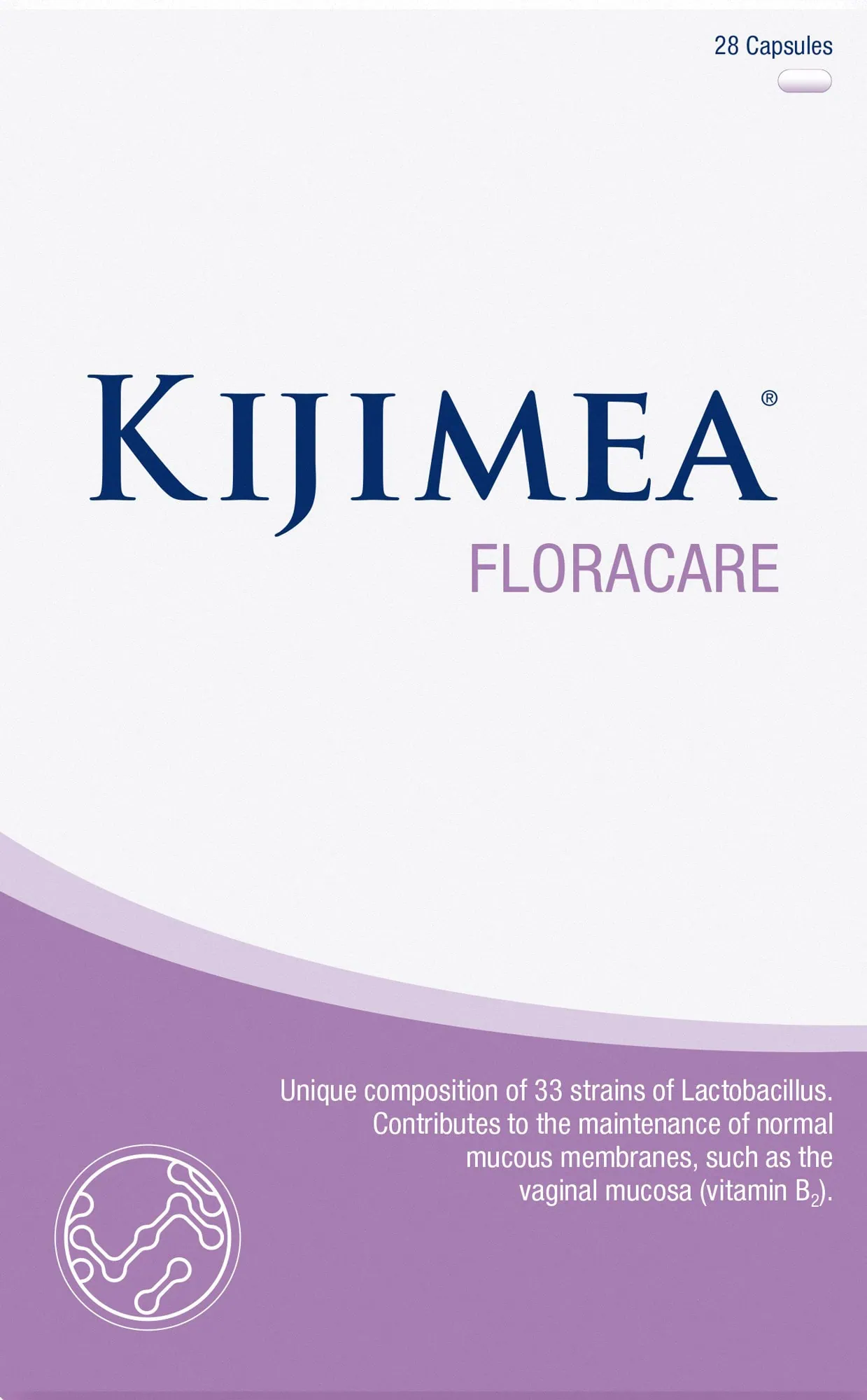
Researchers from the German brand SYNformulas, which has been active in microbiome research for many years and whose findings have already been published in the world-renowned journal The Lancet, have developed a novel product based on these three factors: this replicates the natural vaginal microbiome in all its diversity by supplying 33 strains of lactobacilli, which the researchers believe to be particularly effective.
The strains include several different strains from the Lactobacillus crispatus and Lactobacillus gasseri families, which play dominant roles in a healthy vaginal microbiome, as well as other specifically selected strains from the Lactobacillus plantarum and Lactobacillus delbrueckii families, among others.
These 33 strains are included in detail:
L. crispatus SG18, L. crispatus QL33, L. crispatus ID63, L. fermentum LB91, L. fermentum LR28, L. gasseri RG19, L. gasseri SW5, L. reuteri OS31, L. rhamnosus ZR54, L. rhamnosus AC94, L. rhamnosus IX51, L. rhamnosus HM83, L. rhamnosus BP73, L. rhamnosus VN76, L. acidophilus FY47, L. acidophilus MK24, L. brevis VF63, L. delbrueckii ssp. bulgaricus ZDS17, L. casei JC65, L. helveticus LM56, L. johnsonii BI99, L. delbrueckii ssp. lactis UMF46, L. paracasei NC701, L. paracasei DZ13, L. paracasei CQ16, L. paracasei WO9, L. plantarum XG46, L. plantarum KU86, L. plantarum JT63, L. plantarum EV38, L. plantarum YCA16, L. sakei FQ41, L. salivarius PL301
Kijimea FloraCare also contains an exceptionally high dose: It contains 10 billion microcultures per capsule, which corresponds to no less than one fifth of the bacteria contained in a healthy woman's vaginal secretions per day.
It also contains other valuable micronutrients such as vitamins B3, B7 and B2, which contribute to the maintenance of normal mucous membranes (e.g. the vaginal mucosa), also in high doses: just one capsule covers an adult woman's daily requirement of these important nutrients, which help to create an optimal environment for the lactobacilli by supporting the vaginal mucosa.
How is Kijimea FloraCare consumed?
In addition to fulfilling their scientific principles, it was also important to the researchers to make it as easy as possible to consume so that the concept could be easily integrated into everyday life. They therefore opted for the capsule dosage form of Kijimea FloraCare - the bacteria reach their destination via the body's own connection between the digestive tract and the vaginal microbiome.
In this way, the unpleasant regular insertion of vaginal suppositories or application of creams in everyday life is avoided.
How to order Kijimea FloraCare
The easiest way to order Kijimea FloraCare is on the manufacturer’s own website at Kijimea.co.uk. In the Kijimea online shop, customers also benefit from a money-back guarantee: the manufacturer is so convinced of the quality of its products that it will refund the purchase price within the first 30 days to customers who, contrary to expectations, are not satisfied.
In addition, shipping is free on Kijimea.co.uk from a purchase value of £25.
Good to know: All Kijimea products are manufactured in Germany without the use of genetic engineering and are not tested on animals. Both the manufacturing process and the equipment used are certified according to the pharmaceutical grade standard GMP. In addition, each batch is tested in an independent laboratory before it goes on sale.
Why most people order the large pack
Kijimea FloraCare is available in pack sizes of 28, 56 and 84 capsules. However, as bacterial supplements normally develop to their full potential only when taken daily over a longer period of time (experts recommend at least 2-3 months), most women order the large pack straight away. This way they can be sure to have Kijimea FloraCare at home for the first 3 months.
Consumers also appreciate the careful composition and high quality standards that the company applies to its products. Numerous enthusiastic online reviews can be found.

Claire A.

'A very good product. I feel much better after the first pack. I'm very satisfied.'
Hannah L.
'I am more than satisfied with the product and after only 14 days of taking it, I feel that the tablets are working and my symptoms have improved. I have taken similar products before and actually didn't notice any effect, so I can give the Kijimea product an absolute buy recommendation.'
Vanessa H.
'Excellent product! Easy to take thanks to the small capsules. Contains a large number of different bacterial strains. Significantly more than in other probiotic products for vaginal flora. Some of which were also more expensive. I hope I achieve the desired success in bringing my unbalanced flora back into balance.'
The information on this page does not constitute medical advice and should not be considered as such. Consult your doctor before changing your regular medical care. This product is not intended to diagnose, treat, cure or prevent any disease. The effect depends on individual factors. The images of those affected are based on real people whose names have been changed.